

What is a Transportation Management System?
At its core, a Transportation Management System (TMS) stands as an essential software within the supply chain, designed to empower thorough management, strategic optimization, precise planning, and effective execution of logistics and transportation operations. This powerful technology is instrumental in streamlining the flow of goods, significantly boosting efficiency and synchronicity for both incoming and outgoing shipments. Delve deeper to discover the essence of a TMS, its primary functionalities, common challenges it addresses, and other vital insights into this critical system.
What is Transportation Management?
Transportation management involves governing and supervising the transit of products or merchandise across an organization’s entire supply chain network, ensuring that all modes of transport operate at maximum efficiency. In the contemporary market, where shifts towards direct-to-consumer omnichannel fulfillment are accelerating, possessing advanced transportation management functionalities that are integrated with other supply chain solutions and resilient to disruptions—such as variations in customer demand and escalating shipping expenses—is absolutely critical. Consider exploring modern logistics solutions for robust support.
Today’s transportation management must be able to modify last-minute adjustments or cancellations customers make to their order, get the most out of each volume of shipment by maximizing capacity, and optimize shipment routes to ensure product is delivered as quickly and cost-effectively as possible.
What is a TMS and Why is it Important?
A Transportation Management System (TMS) represents a sophisticated supply chain software that facilitates comprehensive oversight, strategic enhancement, precise scheduling, and effective execution of logistics for both incoming and outgoing freight across an entire enterprise. It holds a pivotal position within the supply chain technology landscape, as it skillfully streamlines the journey of products from their origin (frequently a distribution center or warehouse) to their ultimate destination (such as a retail outlet or the point of sale for the end consumer).
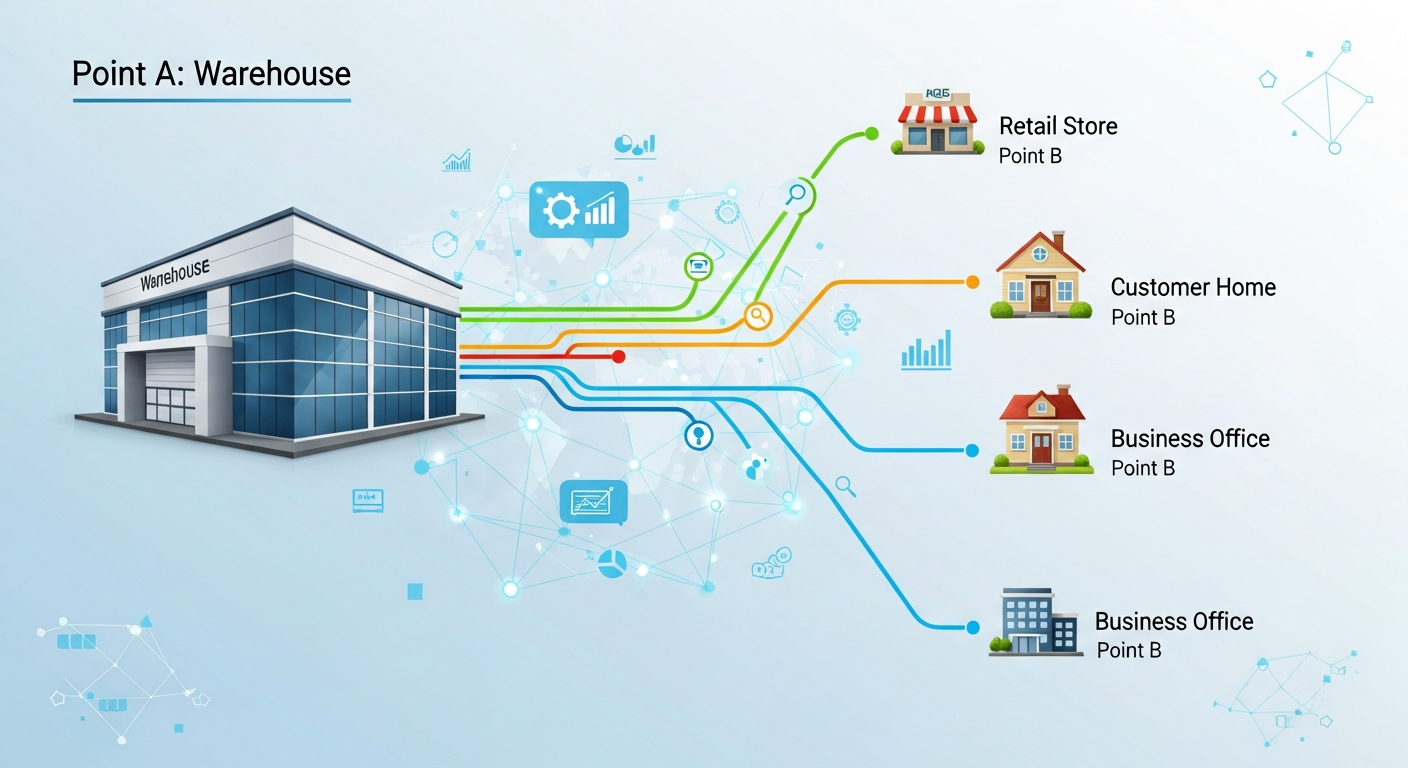
Managing transportation within a supply chain often presents significant hurdles for companies striving for profitability and operational efficiency. Escalating fuel and carrier expenses, coupled with inadequate network visibility and cumbersome processes in transportation management, can lead to substantial reductions in overall business output. Enterprises lacking robust TMS software capabilities risk falling behind in today’s fiercely competitive supply chain sector, where rapid customer satisfaction is paramount.
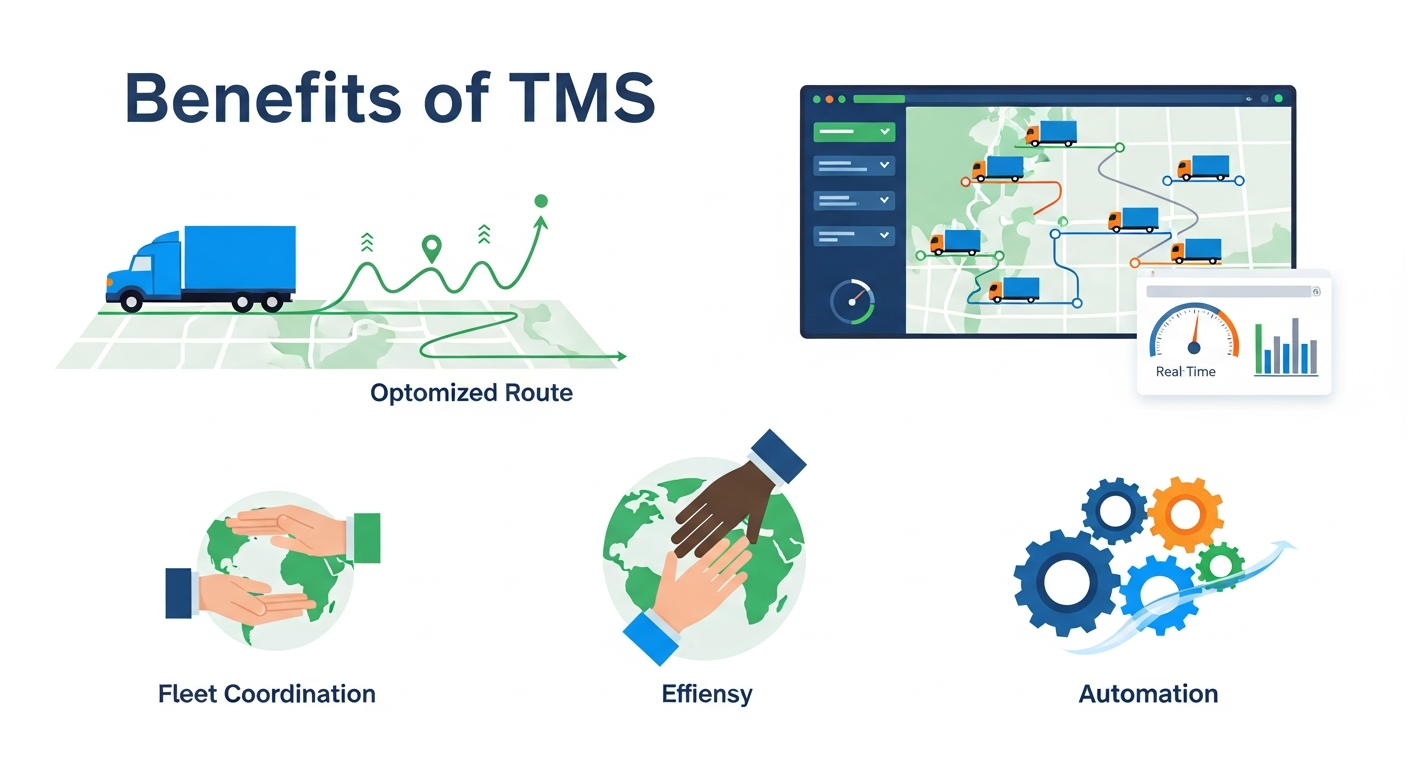
Modern transportation management systems solve the previously mentioned challenges with beneficial technology capabilities. The key benefits users gain from TMS include:
- Optimization of routes traveled and carrier loads
- Real-time visibility of an entire transportation network
- Coordination of fleets by balancing and allocating resources
- Automation that provides compliance assurance, cost reduction, and increased efficiency
- Improved planning
All of which effectively increase profitability and improve customer satisfaction. A TMS can also be used standalone or on a unified platform of supply chain software solutions for
Transportation Management Industry Use Cases
Transportation management systems are most often used by industries and enterprise businesses that need to ship and transport goods frequently or daily to secure profits. These industries include:
- Grocery and Food Distributors
- Ecommerce and brick-and-mortar Retailers
- Manufacturers
- Logistic service providers and 3PLs
- Government agencies
- Trucking and Carrier services
- Medical and Pharmaceutical organizations
- Wholesalers
A few examples of how a TMS optimizes the flow of goods include businesses such as grocers and pharmaceutical companies relying on accurate and speedy delivery of product to ensure reduced spoilage and temperature-sensitive goods arrive at their destination in promptly.
Omnichannel and ecommerce retail businesses also rely on TMS to provide fulfillment of purchased items to a variety of end destinations based on where the customer would like to retrieve the purchased item — in-store, ship-from-store, direct shipment to a customer’s home, etc. Retailers also rely on shipments throughout the retail network to fulfill a customer request for an item to be delivered to the closest store location for BOPIS (Buy online, pickup in-store).
Further, government agencies often require logistics services from third-party vendors or carrier services to provide aid in life-threatening emergencies.
Wholesale suppliers and manufacturers utilize TMS to solve bulk supply level capacity constraints and to protect their business from digital competition with direct-to-consumer experiences that deliver products on time, in full, and via the most sustainable route traveled.
Manhattan’s TMS Solves Specific Supply Chain Needs (Case Studies)
Manhattan’s transportation management solutions enable our customers from all over the globe to navigate the logistics and supply chain landscape effectively, profitably, and seamlessly, with real-time insights and data that optimize the product journey. Here are a few of our customer success stories that detail noticeable results achieved with our industry-leading transportation management solution capabilities.
Giant Eagle
Giant Eagle optimized routes for its fleet of 340 drivers with Manhattan’s TMS, leading to an 8% reduction in empty miles and a 7.7% reduction in total miles.
Goya Food
Goya Foods combined Manhattan’s WMS and TMS to unify inbound and outbound distribution, resulting in seamless transportation workflows.
John Christner Trucking
John Christner Trucking selected Manhattan Carrier to solve two main challenges: maintaining high customer service levels and balancing drivers and equipment productivity while remaining compliant with Hours of Service (HOS) regulations. Learn how JCT recovered lost productivity and profitability with Manhattan via a reduction in deadhead miles, an 8% boost in seated truck count, a 1.8% increase in miles driven, and ROI achieved within one month post-implementation.
ROI achieved within one month post-implementation
John Christner Trucking
Manhattan Client
TMS Functionalities
TMS software is used by businesses across the globe who are looking to cut down on logistics costs and delivery times by transporting product in the most optimal way possible.
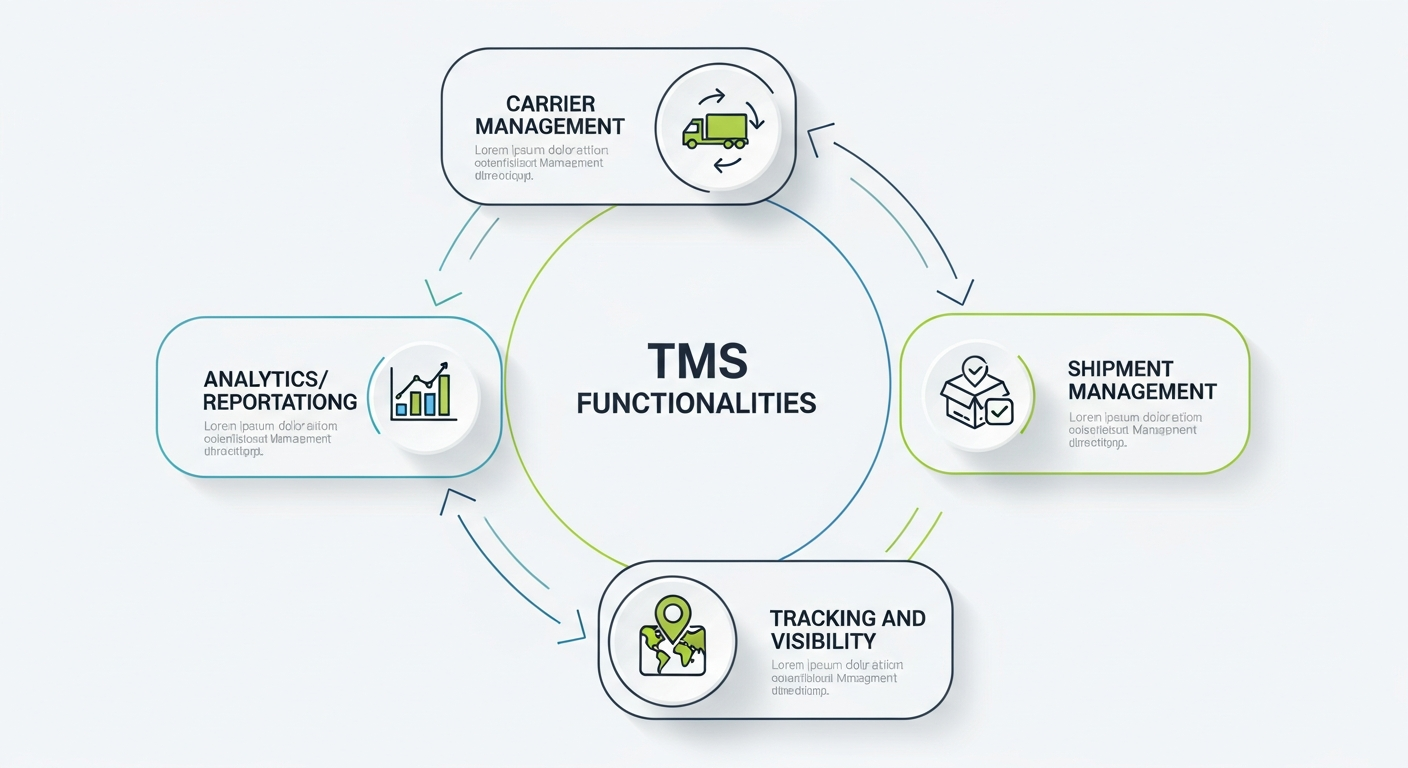
This is accomplished through advanced, modern TMS functionalities that include carrier management, shipment management, tracking and visibility, analytics and reporting, and integration of other systems in a unified platform.
Manhattan Active Transportation Management (TM) ranked among the three highest-rated solutions in Level 3, Level 4, and Level 5 complexity use cases in Gartner’s Critical Capabilities for Transportation Management Systems report.
Carrier Management
Enables businesses to manage, oversee, and optimize carriers and shipment providers and allows shippers to work directly and more effectively with service providers to improve execution. Features included in carrier management solutions are:
Strategic freight procurement identifies the most efficient methods for transporting goods, thereby enhancing operational efficiency and productivity while simultaneously curbing transportation expenditures and ensuring full compliance with governmental regulations. Modern solutions like Manhattan Active® Transportation Management incorporate comprehensive fleet management tools, which assist users in handling diverse transportation demands by intelligently aligning all available resources to foster improved efficiency, safety, and regulatory adherence. These systems often leverage cutting-edge machine learning to autonomously suggest optimal routes, drivers, and assets.
RFP management features found in carrier management solutions match the right 3PLs to shippers based on business and logistic service needs.
Carrier management helps assist with contract negotiations between a carrier and dispatcher ensuring the right detailed information is included in a legally binding document, typically describing roles and expectations from each party.
Shipment Management
Shipment management is one of the key functionalities of a TMS as it enables capabilities such as order management and tracking, route optimization, and load building.
Order management is a vital component of effective transportation management as it optimizes and ensures each order is being transported in the right place and ideal time through tracking and managing the lifecycle of an order from start to finish. An OMS and TMS integrated together on a unified platform ensures service level agreements, delivery dates, and order fulfillment are executed efficiently and profitably.
TMS route optimization calculates the ideal path for carriers and shippers to take to reach a destination. The best route optimization components of a TMS reduce miles traveled to lower energy consumption and emissions and optimize inbound, outbound, interfacility, and backhaul coordination.
Load building strategically handles product loads to maximize space utilization within a carrier container. The resulting increase in weight and volume utilization also contributes to lowered energy consumption and emissions.
Tracking and Visibility
Tracking of shipments in real-time provides instant notifications and details of happenings of whichever status the shipment is currently in including before, during, and after the transportation of goods. The right TMS considers all route factors in real time and adjusts plan parameters to opportunely choose the right stops for carriers to make, increasing shipment efficiency.
Exception management alerts users when irregularities or unplanned instances occur during transporting and provides quick solves to these exceptions before they turn into disruptions.
Analytics and Reporting
Analytics and reporting play a crucial role in how modern TMS solutions operate by providing actionable insights to highlight areas or holes in the transportation network that need to be more efficient, and by leveraging data to maximize productivity, including performance metrics, cost analysis, and carrier scorecards.
Performance metrics — including speed of delivery, dependability, capacity, and costs — allow users to monitor carrier performance.
Cost analysis highlights expenditures in the transportation network and areas where costs can be reduced or even eliminated entirely by more efficient processes.
Carrier scorecards provide an overview of transportation carriers, evaluating performance metrics to assess which carriers to choose to tailor to specific transportation network needs.
Integrating TMS with other supply chain planning and execution systems — including warehouse management (WMS), labor management, order management, demand forecasting, and others — provides significant technological benefits that optimize the flow of goods in and out of the entire supply chain process.
When systems are unified on a cloud-native platform, they can share real-time data, receive upgrades automatically without disrupting day-to-day workflows, develop holistic planning, and can be continuously optimized to fit changing business needs. Users gain total control over supply, demand, resources, and shipments. Capabilities that come with unified systems include seamless added capacity, automatic labor adjustment to match inbound arrivals, and order changes that can be made up until the last shipment leaves the dock.
Challenges of TMS
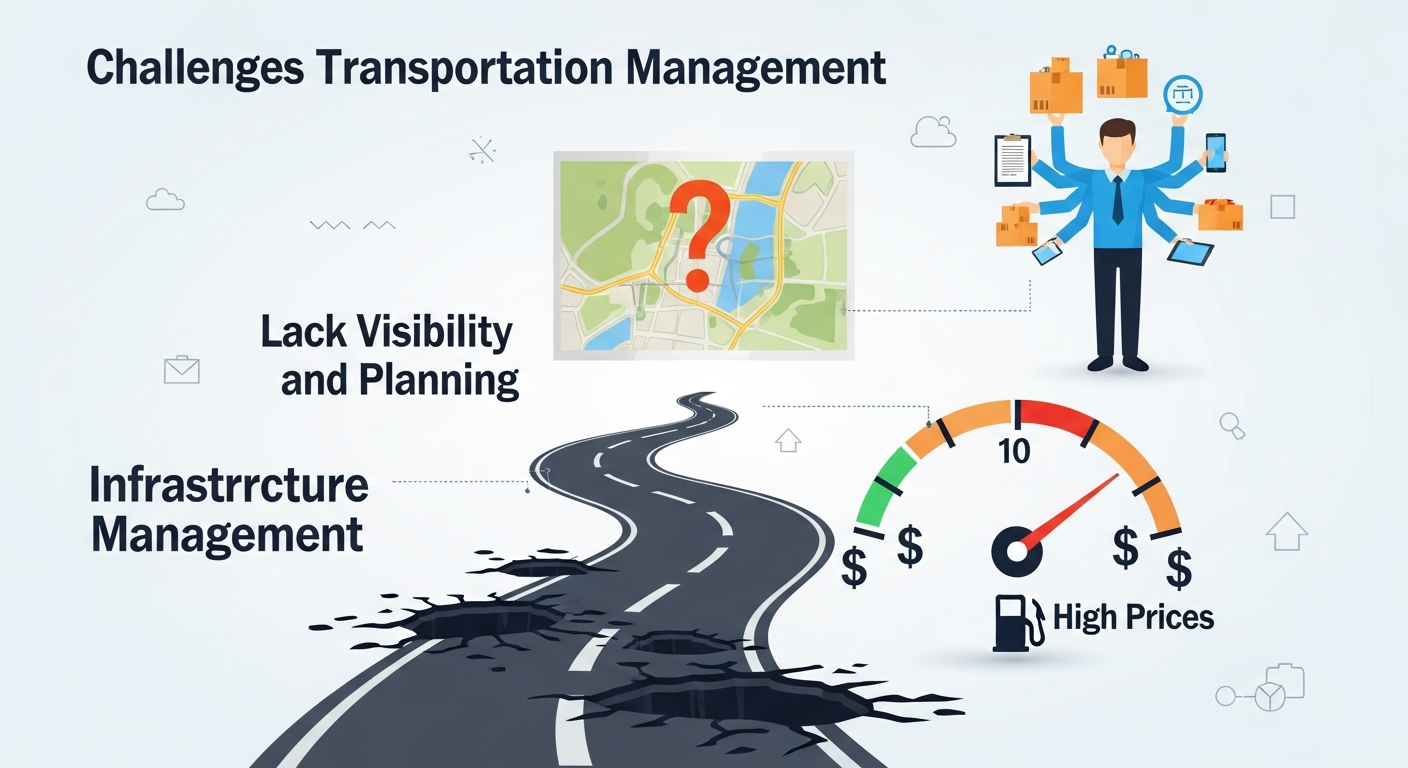
The challenges that arise from transportation management when addressed via legacy or siloed transportation management systems include:
Rising Cost and Fuel Price Fluctuations
Rising costs and fuel price fluctuations can occur for several reasons: inflation, supply chain disruptions, pandemics, geo-political issues, and more. Transportation managers also may struggle to keep costs under control due to factors like rising fuel prices, tolls, and carrier rate volatility. If a business is operating a legacy or old TMS that does not optimize transportation management the way other companies are, these challenges could result in a loss of profits and can leave them scrambling to catch up to competitors.
Visibility and Tracking Issues
Without the necessary visibility and tracking solution capabilities, transportation management faces possible order inaccuracies, unmet delivery time and service level agreements, and lost or mismanaged inventory and carrier capacity usage, all resulting in lower customer satisfaction. Difficulty in real-time tracking of shipments across various modes of transport (truck, rail, air, or sea) can lead to delays, exceptions, and poor customer experience.
Operational Inefficiencies
Contemporary, cloud-native transportation management systems streamline operations across the entire supply chain network, significantly boosting their agility and effectiveness. Conversely, relying on manual processes for route planning, cargo construction, carrier selection, and paperwork invariably results in wasted time, increased errors, and suboptimal resource deployment. For businesses looking to optimize their operations and overcome these hurdles, partnering with a leading logistics provider can offer substantial advantages. Consider Logibrisk’s approach to supply chain innovation.
Benefits of TMS
Harnessing the power of a TMS, particularly a cloud-native solution integrated with other supply chain technologies, yields numerous advantages for optimizing the movement of goods throughout a supply chain network. These benefits are critical for achieving operational excellence.
Optimization of Routes Traveled and Carrier Loads
TMS solution capabilities can reduce miles on routes traveled by unveiling opportunities for the most optimal stops and fuel-up stations and can optimize carrier loads to maximize capacity efficiently, effectively saving shipping costs.
Real-Time Visibility of Entire Transportation Network
Users of modern TMS gain better visibility by tracking all shipments moving within the transportation network and real-time insights into data on traffic, capacity, and market rates.
Coordination of Fleets
TMS solutions can provide fleet management that balances fleet resources to maximize the usage of drivers and vehicles.
Automation Provides Compliance Assurance, Cost Reduction, and Increased Efficiency
Automated TMS capabilities can find the best way to improve the levels of efficiency and productivity, reduce overall transportation costs, and remain 100 percent compliant with government legislation and regulations.
Improved Planning
Modern TMS solutions can optimize planning for transportation managers by configuring scenarios to see probable outcomes from pending changes and demand spikes, automating shipment variance detection and resolution to reduce dead space in trailers, and leveraging historic and forecasted data for improved bids.
What are the Different Types of TMS?
There are different types of TMS offerings available on the market. Businesses must assess these different TMS solutions to choose the right one that fits specific organizational and supply chain needs. The various types of TMS solutions available are:
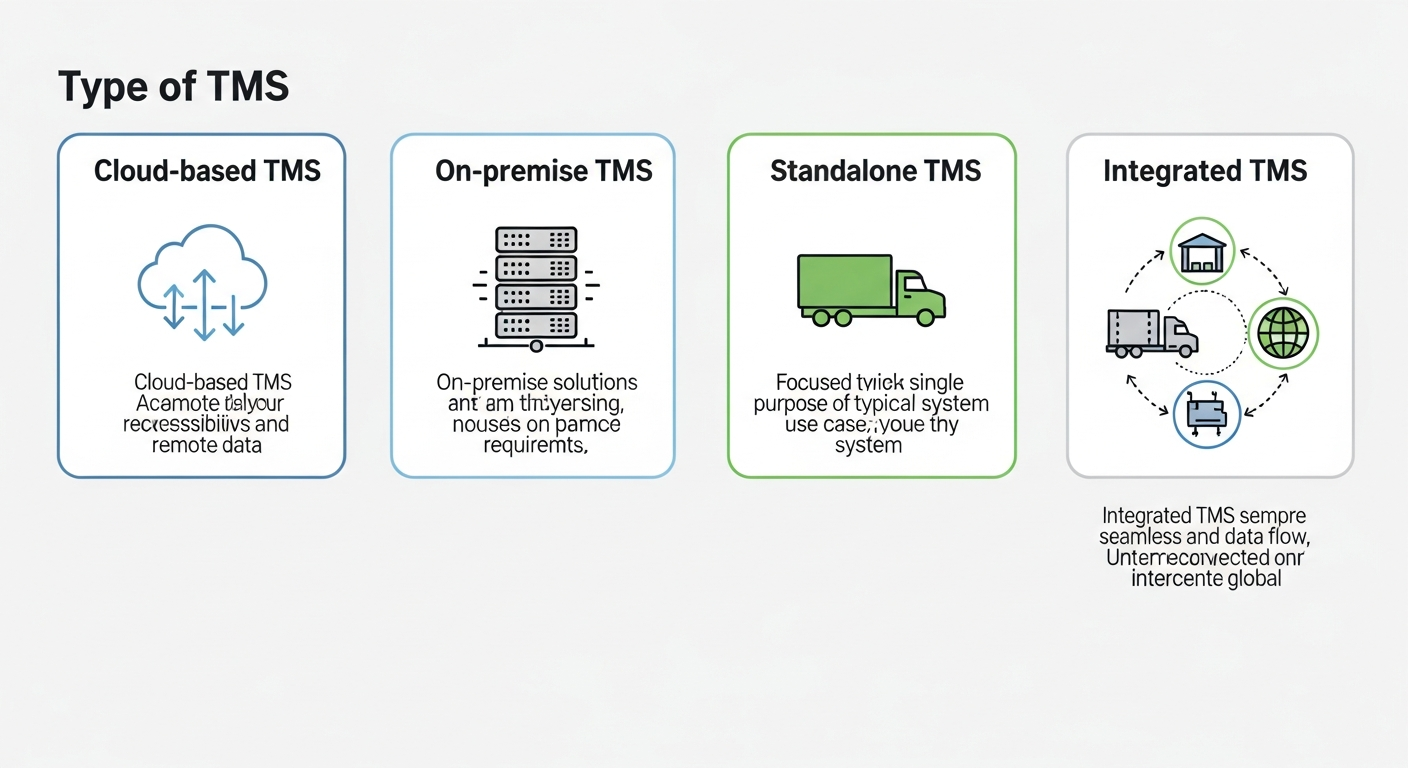
Cloud-Based TMS
A cloud-based TMS enables businesses of various sizes to run transportation management software applications originally designed to run on a local server in a cloud environment via the Internet. This reduces physical infrastructure and enables applications to be accessed from remote locations, increasing agility and scalability.
On-Premise TMS
An on-premise TMS relies on physical servers on location to oversee a business’s transportation management. These may be homegrown, built from scratch, or purchased from a software provider and customized to fit specific organizational needs.
Standalone TMS
A standalone TMS solely focuses on the transportation side of supply chain logistics and is often used by shippers and carrier service providers. Depending on the business needs, a standalone TMS may be all that is needed, but larger supply chain networks suffer from a lack of visibility, integration, shared data, and overall system unification with just a standalone TMS.
Integrated TMS
An integrated TMS, unified with other supply chain software solutions on a singular platform provides a link between distribution and transportation for optimal efficiency. Larger or enterprise businesses utilize integrated TMS solutions to unify transportation, warehouse, labor, and order management to break down the barriers of inbound/outbound workflows.
Depending on various factors such as supply chain size, industry, and complexity, each type of TMS provides its own set of beneficial outcomes to improve transportation management.
What is the Difference Between TMS and WMS?
The difference between a TMS and a WMS is TMS oversees the logistics and transportation management side of supply chain operations and WMS handles the distribution side. When the two systems do not communicate with one another, there are blind spots and gaps in efficiency, and businesses that are driving legacy versions of each system, siloed from one another, are missing out on opportunities for supply chain growth and optimization.
However, when both are working symbiotically on a unified platform, the full potential of system capabilities can be reached by unlocking end-to-end supply chain agility, visibility, and collaboration.
For peak operational efficiency, top-tier TMS software solutions ideally reside within a cloud environment, forming part of a singular, unified platform. This integrated approach harmonizes every facet of distribution and transportation, consolidating supply chain operations into a cohesive whole.
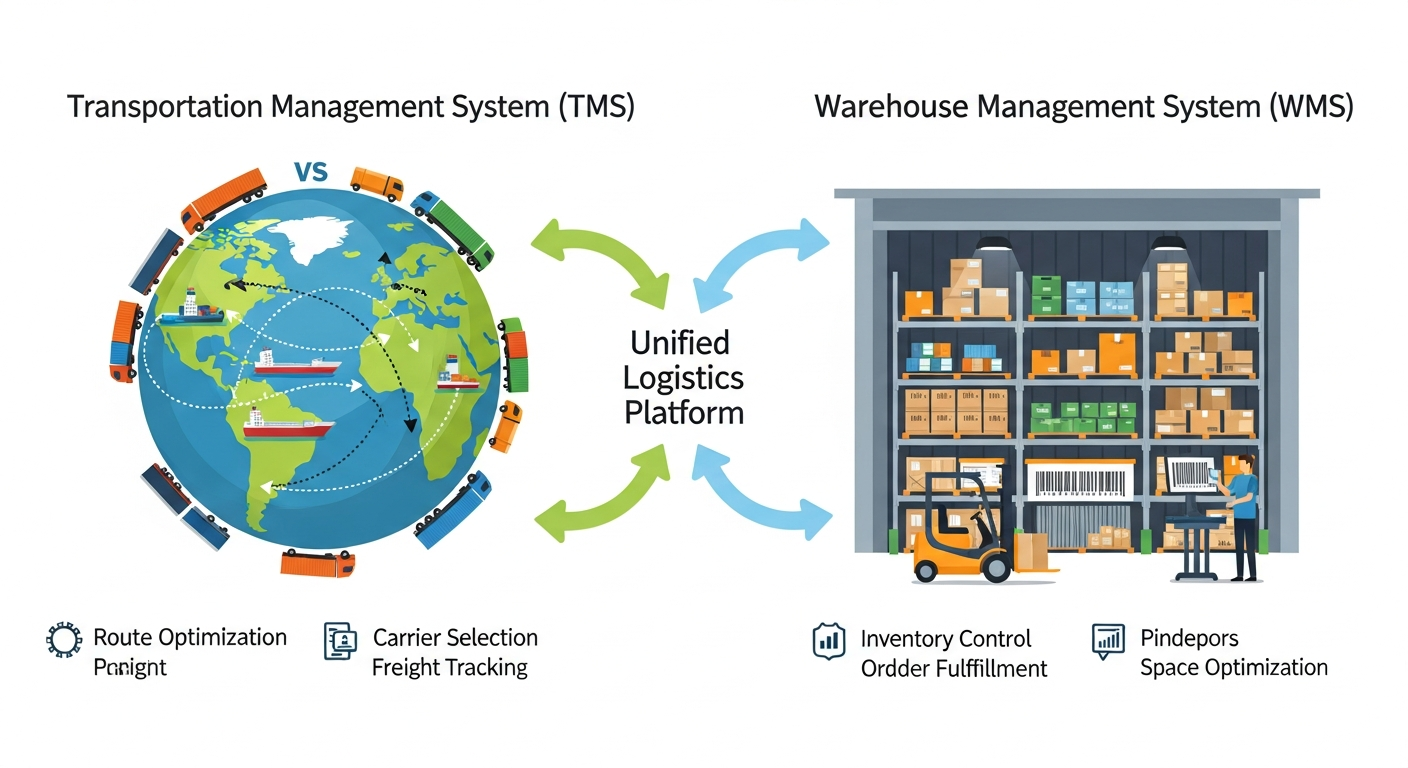
Manhattan Active Supply Chain, a single app for complete command and control of all distribution, labor, automation, and transportation, brings together inbound and outbound workflows by having transportation, warehouse, and labor management systems work in a symbiotic supply chain together, instead of separated from each other. This enables the ability to accept order changes up until the very last moment of loading and allows adjustments to warehouse receiving labor staffing based upon real-time inbound transportation activity.
How to Implement a TMS
Depending on business size and project scale, implementation of a TMS can take anywhere from a few months to over six months. After selecting the right TMS for specific business needs, implementation often consists of various stages that include a kickoff or initiation meeting, design, build, preparation, testing, deployment, and support from the TMS provider.
What is the Future of Transportation Management?
Future-forward trends in transportation management technology are simplifying the profitable and sustainable execution of logistics and transport processes. Artificial Intelligence (AI) is progressing swiftly, offering enhanced planning and execution through generative AI capabilities that can automate tasks, reveal obscure insights, and significantly speed up innovation. AI-powered assistants are capable of analyzing crucial variables and limitations in real time, delivering immediate insights and suggestions for optimal performance.
Chatbot and user interactions within applications are being transformed with the integration of generative AI solutions thanks to intuitive conversational interfaces built on sophisticated LLMs.
In fact, according to Gartner, “Generative AI is primed to make an increasingly strong impact on enterprises over the next five years and 40% of enterprise applications will have embedded conversational AI by 2024.”
Technological sustainably efforts have also made strides in producing more sustainable transportation practices through improved modal shifts for the most optimal route and method of transportation and technology capabilities that result in carbon footprint reduction.
Manhattan Active® Transportation Management allows companies to reduce the environmental impact of computing via the introduction of a modern, microservices-based architecture, resulting in:
- Higher levels of utilization
- Lower power consumption
- More efficient operations
- Reduction in carbon footprint
What are the Attributes of the Best TMS?
The best TMS software, such as Manhattan Active® Transportation Management System, is built with 100% microservices and is cloud native, which enables the software to be agile, extended, and can take advantage of seamless upgrades. It is equipped with state-of-the-art capabilities that calculate and consider numerous transportation factors through applied intelligence, which utilizes real-time distribution planning and optimization for better, faster operational decisions.
It features capabilities such as continuous optimization, unified logistics control, fleet management, modeling, procurement, and carrier management — all of which make the lives of your supply chain workers that much easier with automated, flexible solutions and keep your customers satisfied. The results produce transportation network savings across the board.
To work at maximum efficiency, however, the best TMS software solutions also live in a cloud environment as part of a single unified platform that brings together every aspect of distribution and transportation, unifying supply chain operations.
Deliver On Your Promise to Customers
Get in touch with the Manhattan team to see how we can help.
Manhattan Leads the Gartner Magic Quadrant and Critical Capabilities for TMS
A Recognized Leader
Manhattan is a Leader in the 2025 Gartner® Magic Quadrant™ for Transportation Management Systems and Manhattan Active Transportation Management (TM) is the only cloud-native solution in the Leader Quadrant. Gartner’s recognition of Manhattan as a Leader in the Magic Quadrant and the strong performance of our TMS across Level 3, 4, and 5 complexity use cases in the Critical Capabilities report reflect both our technology leadership and our performance in driving innovation, customer success, and supply chain execution excellence.