
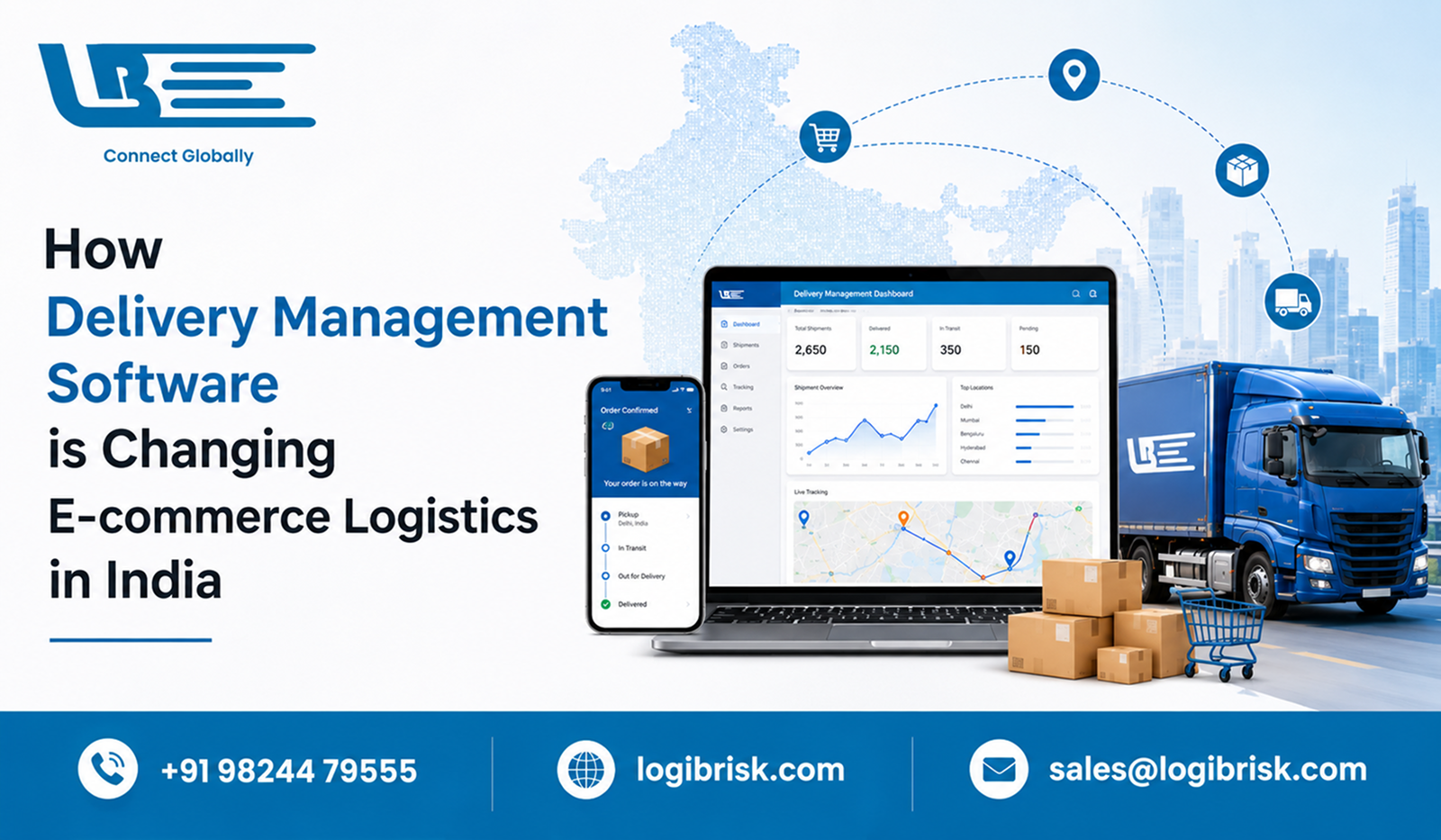
How Delivery Management Software is Changing E-commerce Logistics in India
India’s e-commerce industry is on a roll. Millions of orders are placed every single day from metro cities to Tier-3 towns, and every one of those orders needs to be picked up, dispatched, tracked, and delivered on time.
But here is the uncomfortable truth that most D2C brands and logistics companies already know: getting the order placed is the easy part. Getting it delivered is where things fall apart.
Return to Origin (RTO) rates in India hover between 20 to 30% for COD orders, meaning nearly one in every three shipments comes back to the seller without being delivered. That is not just a logistics problem; it is a direct hit to your revenue, your inventory, and your customer trust.
The shift happening right now in Indian ecommerce and logistics is not about hiring more delivery staff or switching courier partners. It is about using smarter software to take control of the entire delivery process from dispatch to doorstep. This blog breaks down exactly how delivery management software is making that shift happen.
What is Delivery Management Software?
Delivery management software is a platform that helps businesses plan, execute, track, and optimise their entire delivery process in one place.
Think of it as the brain behind your logistics operation. The moment an order is placed, the software takes over, assigning the right vehicle, mapping the best route, tracking the shipment in real time, notifying the customer, handling failed deliveries, and generating the invoice automatically once the order is completed.
Without it, all of that happens manually through phone calls, WhatsApp messages, Excel sheets, and a lot of back-and-forth. With it, most of those tasks run on their own, with your team stepping in only when something actually needs attention.
For Indian e-commerce businesses managing hundreds or thousands of orders a day, this is not a nice-to-have. It is the difference between growing efficiently and drowning in operational chaos.
The Current State of E-commerce Logistics in India
India’s e-commerce logistics market is growing fast and getting more complex by the day. Here is what the ground reality looks like right now:
- Tier-1 cities now expect same-day or next-day delivery; anything slower is considered poor service.
- Tier-2 and Tier-3 towns are ordering more than ever before, but the delivery infrastructure there is still catching up with demand.
- COD still dominates; Cash on Delivery accounts for 60 to 65% of all e-commerce orders in India, putting enormous pressure on delivery and reconciliation systems.
- RTO rates are bleeding businesses. RTOs accounted for nearly 25–30% of failed orders across mid-size Indian D2C brands in 2024 alone, costing companies lakhs in reverse logistics, wasted inventory, and broken customer trust.
- The COD vs Prepaid gap is massive. Nearly 26% of COD shipments are returned as RTOs, while prepaid orders experience far lower RTOs at less than 2%.
- The pain points are real, but most of them are directly solvable with the right delivery management software.
Key Ways Delivery Management Software is Changing E-commerce Logistics
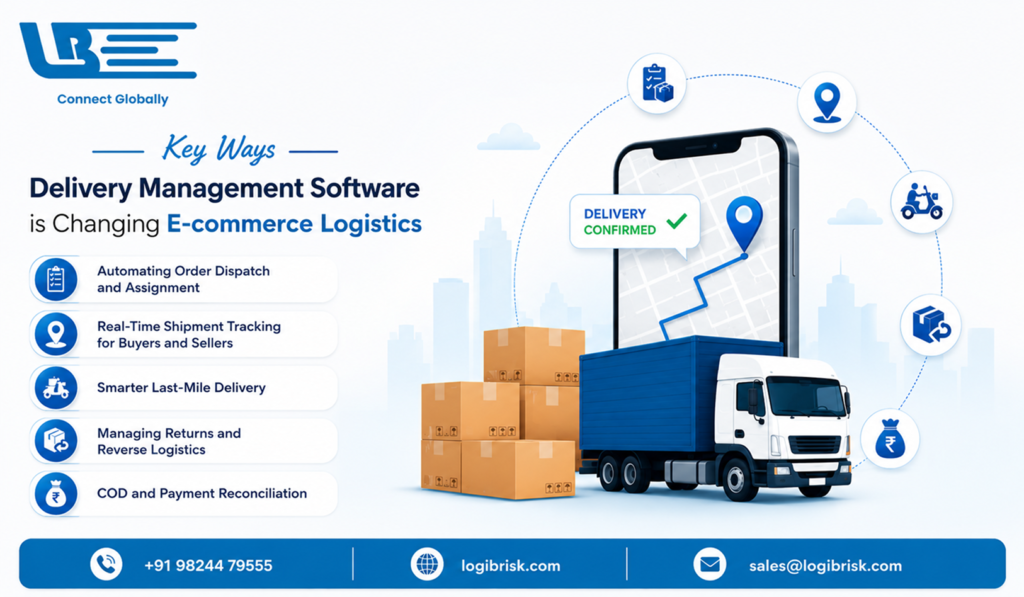
Automating Order Dispatch and Assignment
In a manual setup, dispatching 500 orders a day means someone is spending hours assigning drivers, calling for confirmations, and updating spreadsheets. Mistakes are inevitable: wrong driver, wrong route, wrong priority.
E-commerce delivery management software handles dispatch automatically. The moment an order is confirmed, the system assigns it to the right vehicle based on location, capacity, and delivery zone. No calls, no confusion, no delays. Your dispatch team goes from managing chaos to monitoring a dashboard.
Real-Time Shipment Tracking for Buyers and Sellers
One of the biggest frustrations in Indian e-commerce, both for sellers and customers, is not knowing where an order actually is.
Customers call support. Support teams call the courier. The courier checks with the driver. By the time anyone has an answer, the customer is already frustrated.
Real-time shipment tracking solves this completely. The customer gets live updates at every stage: order picked up, in transit, out for delivery, delivered. The seller has full visibility on the dashboard. And the support team stops spending half their day answering “where is my order?” calls.
Around 75% of online shoppers consider delivery reliability a key factor in brand trust. Real-time tracking is how you build that reliability without any extra effort from your team.
Smarter Last-Mile Delivery
Last-mile delivery is where most e-commerce orders either succeed or fail, and it is also the most expensive part of the entire logistics chain. Poor route planning, unoptimised delivery sequences, and no-shows at the customer’s address all pile up into failed deliveries and inflated costs.
The right last mile delivery management software handles this with AI-powered route optimisation, calculating the most efficient delivery sequence based on location clusters, traffic patterns, and time windows. Drivers spend less time on the road, cover more stops per trip, and reach customers within promised time slots.
The result is fewer failed delivery attempts, lower fuel costs, and customers who actually receive their orders when expected.
Managing Returns and Reverse Logistics
Returns are an unavoidable part of e-commerce. But managing them manually, coordinating pickups, updating inventory, reconciling refunds, is a nightmare that gets worse as your order volume grows.
Good reverse logistics software India businesses use today includes return pickup auto-assignment, in-transit tracking, inventory updates, and refund triggers all without anyone manually intervening. The system handles the entire return cycle from the moment the customer raises a request to the moment the product is back in your warehouse.
This is especially critical for Indian e-commerce, where COD remains the most preferred payment mode across Tier 2, 3, and 4 cities, and is the single biggest contributor to RTO losses. Automating the return process reduces the cost and time involved in handling each case significantly.
COD and Payment Reconciliation
COD reconciliation is one of the most time-consuming and error-prone tasks in Indian logistics. Multiple delivery agents, multiple collection amounts, multiple remittance cycles, and all of it tracked manually in most businesses.
Delivery management software brings COD reconciliation into a single automated workflow. Every collection is logged against the order, reconciled against the invoice, and flagged if there is a discrepancy. Your accounts team stops chasing drivers for collection reports and gets clean, accurate data automatically.
Benefits of Delivery Management Software for E-commerce Businesses
When Indian e-commerce brands and logistics companies implement proper delivery management software, the impact shows up across the entire business:
- RTO rates drop: Automated customer notifications, address verification, and smarter NDR handling mean fewer orders come back undelivered. Automating NDR handling alone reduces failed delivery rates by up to 30%
- Delivery speed improves: Route optimisation and auto-dispatch mean faster turnaround from order to doorstep
- Customer satisfaction goes up: Real-time updates and reliable delivery windows build the kind of trust that brings customers back
- COD reconciliation becomes clean: No more chasing drivers or manually matching collections to orders
- Operational costs come down: Less manual work, fewer errors, and better route efficiency all add up to significant savings
- Scaling becomes possible: You can handle 5x the order volume without 5x the staff
Challenges in E-commerce Logistics That Software Solves
Let us be specific about the problems that delivery management software directly addresses:
High RTO rates
Using RTO reduction software, Indian logistics companies are now automating NDR management, customer communication, and AI-based order risk flagging, bringing RTO numbers down from 25–30% to well under 10% for brands that use it consistently.
Failed delivery attempts
Customers not home, wrong addresses, no communication before arrival, these are all preventable with automated pre-delivery notifications and slot-based delivery.
No visibility across multiple courier partners
Managing three or four courier partners manually means logging into separate portals, reconciling separate data, and putting together a picture that is always incomplete. A single smart auction management system dashboard consolidates everything.
COD fraud and collection gaps
Without automated reconciliation, it is easy for collection amounts to go untracked. Software closes that gap entirely.
Seasonal volume spikes
During Diwali or Big Billion Days, order volumes can triple overnight. Manual systems break. Software scales.
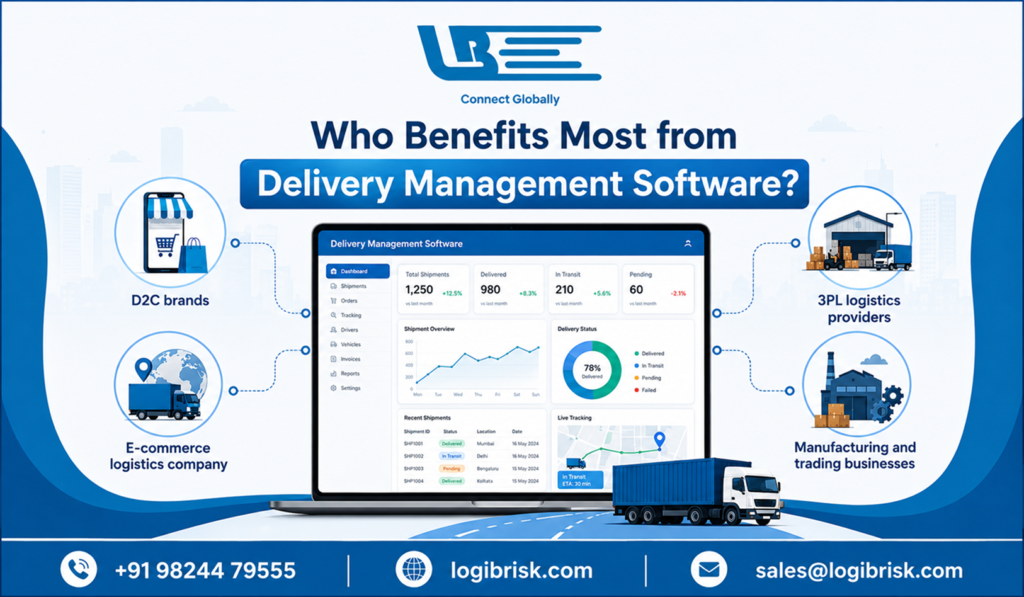
Who Benefits Most from Delivery Management Software?
Not every business has the same logistics challenges, but the right software makes a real difference across the board:
D2C brands
Scaling from hundreds to thousands of daily orders benefits immediately from automated dispatch and RTO reduction tools.
E-commerce logistics company
Operations, whether they run their own fleet or manage third-party courier networks, get the unified visibility and automation they need to serve clients at scale without growing their operations team proportionally.
3PL logistics providers
Handling e-commerce delivery for multiple clients, gain a centralised platform that manages every client’s shipments, billing, and reporting separately without the chaos of separate systems.
Manufacturing and trading businesses
Those who move bulk goods via a smart full truckload management system for inter-city or inter-state freight, and need last-mile coordination on the other end, benefit from an integrated platform that handles both.
For businesses managing express shipments, express cargo handles the time-sensitive end of operations, ensuring urgent deliveries are dispatched, tracked, and delivered with zero delays.
If you are shipping more than 200 orders a day and still managing delivery operations manually, the cost of not switching is already showing up in your P&L.
What to Look for in E-commerce Delivery Management Software
Not every software is built for the complexity of Indian e-commerce. Here is what actually matters:
- Multi-courier integration: The software should connect with all your courier partners and give you a unified view across all of them.
- Automated customer notifications: SMS, WhatsApp, and email updates at every delivery stage. This alone reduces customer support calls significantly.
- Returns and reverse logistics management: Built-in, not bolted-on. Return pickups, transit tracking, and inventory updates should all be part of the same system.
- COD reconciliation: Automated collection tracking and remittance reconciliation is non-negotiable for Indian e-commerce operations.
- GST and E-Way Bill compliance: Especially for businesses moving goods across state lines, compliance should be automatic, not manual.
- Fleet management: integration. If you run your own delivery fleet management software india, the software must track vehicles, manage drivers, and monitor performance in real time, not just track parcels.
- Supply chain management in e-commerce: The best platforms go beyond just delivery. They connect inventory, fulfilment, dispatch, and returns into a single supply chain view, so you are not managing five separate systems for five separate functions.
- API integration with your storefront: Shopify, WooCommerce, or custom platforms should connect seamlessly so orders flow directly into the system without manual entry.
- Scalability for peak seasons: The software should handle 10x your normal volume without slowing down or breaking.
How Logibrisk is Transforming E-commerce Logistics in India
Logibrisk is built specifically for the realities of Indian logistics, including COD complexity, GST compliance, multi-courier operations, and the relentless pressure to deliver faster with fewer errors.
The platform brings together real-time tracking, automated dispatch, route optimisation, reverse logistics management, COD reconciliation, and smart billing all in one place. With 1 Billion+ shipments completed and 500+ enterprises trusting the platform across India, Logibrisk has been tested at scale across categories and geographies.
What makes Logibrisk particularly practical for growing e-commerce businesses is the 5-day onboarding process. You are not waiting months for implementation. The team handles setup and training, and you go live fast, so the efficiency gains start immediately.
Whether you are a D2C brand fighting RTO rates or a 3PL company managing dozens of e-commerce clients, Logibrisk gives you the operational control to deliver better, cost less, and scale without the chaos.
Conclusion
E-commerce in India is not slowing down. Customer expectations are rising, competition is intensifying, and the brands that win are the ones that get logistics right, not just sometimes, but consistently.
Delivery management software is not about technology for its own sake. It is about replacing the manual, error-prone processes that are costing you money, customers, and growth with a system that runs reliably at any scale.
The Indian e-commerce brands that are growing profitably right now are not the ones with the most staff managing logistics. They are the ones with the best software doing it for them.
Your competitors are already delivering faster, cheaper, and with fewer returns. Get a Free Consultation with Logibrisk and take control of your e-commerce logistics before the next peak season hits.
FAQs
Q1: What is delivery management software for e-commerce?
It is a platform that automates and manages the entire delivery process from order dispatch and route optimisation to real-time tracking, customer notifications, returns handling, and COD reconciliation in one system.
Q2: How does delivery software reduce RTO in India?
By automating customer communication before and during delivery, flagging high-risk orders, enabling address verification, and managing NDR workflows, the software reduces the number of failed delivery attempts that turn into RTOs.
Q3: Is delivery management software suitable for small e-commerce businesses?
Absolutely. Even businesses shipping 100-200 orders a day benefit significantly from automation. As volume grows, the software scales with you, so you are not rebuilding your operations every time you grow.
Q4: How does Logibrisk help with e-commerce logistics in India?
Logibrisk provides end-to-end delivery management, real-time tracking, automated dispatch, route optimisation, COD reconciliation, reverse logistics, and GST compliance built specifically for Indian logistics operations.