GPS Fleet Tracking
GPS Fleet Tracking: 5 Benefits, Features & How It Works
There is a moment every fleet manager in India knows well. A client calls to inquire about a shipment. You call the driver. The driver does not answer. You call again. He picks up five minutes later and tells you he is "somewhere on the highway near Vadodara." You relay that to the client, who is less than impressed.
This scene plays out dozens of times a day across Indian logistics operations still relying on phone calls for fleet visibility. And in 2026, it is one of the most expensive habits a transport business can maintain, not just in client relationships, but in fuel waste, idle time, unmonitored driver behaviour, and missed maintenance windows.
According to IMARC Group, India's fleet tracking system market was valued at USD 1,026.2 million in 2025 and is projected to reach USD 3,063.1 million by 2034, growing at a CAGR of 12.53% during 2026–2034.
This guide explains what GPS fleet tracking is, how it works, what data it collects, and why Indian transport companies switching to it cut costs, improve service, and make better decisions every day.
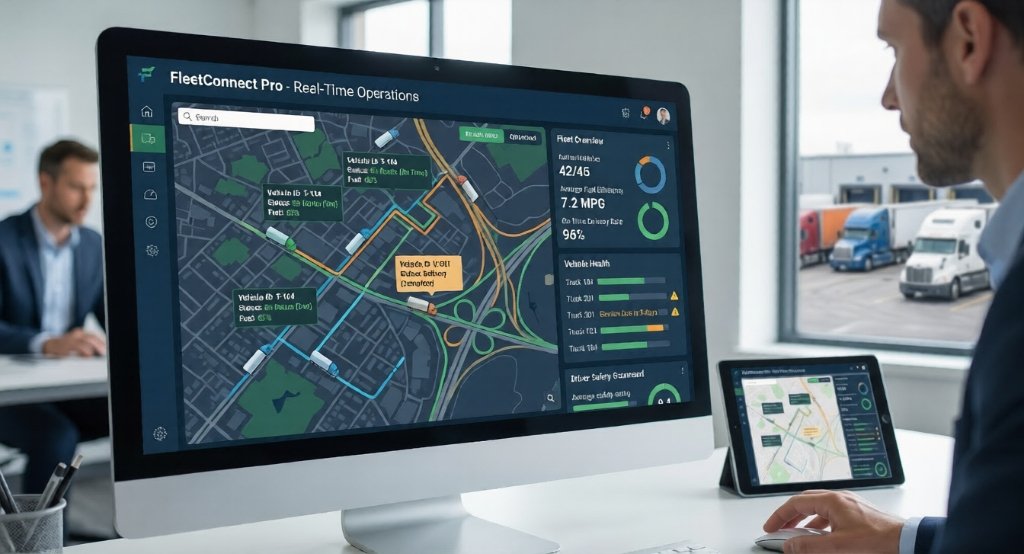
GPS fleet tracking is a system that uses Global Positioning System (GPS) technology to monitor the location and movement of commercial vehicles in real time through a centralised software dashboard. Fleet managers, operations teams, and dispatchers can use the dashboard to view vehicle locations, track trips, and monitor fleet activity from a single platform.
It replaces manual, phone-call-based fleet tracking with digital, real-time data using fleet management software. Depending on the tracking device and software, fleet managers may also monitor speed, route history, idle time, driver behaviour, geofence events, and other vehicle information.
For businesses operating in India, GPS and vehicle location tracking can also have regulatory relevance for certain vehicle categories. For example, AIS-140 standards define requirements for vehicle location tracking and emergency buttons for public service vehicles, while specific requirements also apply to certain vehicles carrying dangerous goods.
GPS fleet tracking works through a simple flow that connects a GPS device installed in the vehicle with a tracking platform used by fleet managers.
A GPS tracking device for fleet management is fitted to the vehicle. The device receives signals from GPS satellites to determine the vehicle's location and collect relevant tracking data.
The collected location and vehicle data are transmitted through a cellular network to a central server. Update frequency depends on the tracking device, system configuration, and network connectivity.
The server processes the incoming data and makes it available through a web-based fleet management dashboard or mobile application.
Fleet managers can view vehicle locations, routes, trip progress, and available alerts from a centralised dashboard. Historical data can also be used for route analysis and performance monitoring.
According to Airtel Business, approximately 95% of India's fleet management market remains untapped, with fleet management platform penetration at roughly 5%. This highlights the growing opportunity for businesses to move from manual fleet tracking to digital fleet management.
GPS fleet tracking provides more than just a vehicle's location. Depending on the tracking device, sensors, and software, it can collect and analyse different types of fleet data:
Fleet managers can view vehicle locations on a live map and monitor movement, speed, and route progress with real-time shipment tracking from a centralised dashboard. Update frequency depends on the tracking device, system configuration, and network connectivity.
GPS tracking records vehicle routes and trip history, allowing fleet managers to review previous journeys, stops, and route deviations. This can help identify inefficient routes and investigate delivery or trip-related issues.
Depending on the tracking system and available integrations, fleet managers can monitor driving patterns such as speeding, harsh braking, rapid acceleration, and excessive idling. This data can help improve driver safety, accountability, and fuel efficiency.
Fleet managers can create virtual geographic zones around depots, customer locations, or restricted areas. The system can send alerts when a vehicle enters or exits a defined zone, helping teams monitor vehicle movement and scheduled visits.
When connected with compatible fuel sensors or vehicle data, GPS fleet tracking systems can provide visibility into fuel levels, consumption patterns, and unusual changes. This can help businesses identify potential fuel loss and improve fuel management.
GPS fleet tracking software can provide alerts for events such as speeding, geofence activity, excessive idling, route deviations, or other configured conditions. Real-time notifications help fleet managers respond to potential issues more quickly.
GPS fleet tracking provides visibility into vehicle location, trip activity, and available vehicle data. When integrated with maintenance and telematics systems, it can help fleet managers identify maintenance needs earlier and plan servicing before issues cause major disruptions.
GPS fleet tracking can help reduce fuel waste by improving route visibility, reducing unnecessary idling, monitoring driving patterns, and supporting fuel tracking where compatible sensors or integrations are available. Over time, these insights, along with route optimization software, can help transport businesses improve fuel efficiency and control operating costs.
GPS tracking can help fleet managers identify speeding, harsh braking, aggressive acceleration, excessive idling, and other risky driving patterns. This data can support driver coaching and encourage safer driving practices across the fleet.
With real-time vehicle visibility, fleet managers can respond to customer queries faster and provide more accurate updates on shipment location and trip progress. When supported by the software, estimated arrival times and automated notifications can also improve communication with customers.
Better visibility into routes, vehicle utilisation, idle time, driver behaviour, and trip performance can help businesses identify inefficiencies and make better operational decisions. Combined with fleet management tools, GPS tracking can contribute to improved fleet utilisation, fewer avoidable delays, and better overall cost control.
| Factor | Manual Tracking | GPS Fleet Tracking |
|---|---|---|
| Vehicle Location | Phone calls and manual updates | Real-time location |
| Fuel Monitoring | Limited visibility | Fuel data and reports |
| Driver Behaviour | Limited visibility | Automated monitoring |
| Route History | Manual records | Digital route history |
| Maintenance Alerts | Mostly reactive | Automated alerts |
| Cost Visibility | Limited | Detailed reports and analytics |
| Client Updates | Manual calls and messages | Faster, data-based updates |
A GPS tracking device is the hardware installed in a vehicle. It receives signals from GPS satellites and transmits location and other available vehicle data to a tracking platform.
GPS fleet tracking software is the platform that collects, processes, and displays this data. Depending on the system and integrations, Fleet GPS tracking can provide features such as route history, geofencing, driver behaviour monitoring, fuel data, alerts, reporting, and fleet analytics.
For example, a basic GPS device may show that a truck is at a particular location. Fleet tracking software can turn that data into useful operational information, such as the vehicle's route, idle time, trip progress, geofence events, and available alerts.
The key difference is simple: the GPS device collects the data, while the software helps fleet managers understand and use that data to improve visibility and manage fleet operations more effectively.
GPS fleet tracking can be valuable for businesses that manage multiple vehicles and need better visibility over their day-to-day operations.
India's road freight industry faces several operational challenges that GPS fleet tracking can help businesses manage more efficiently.
Certain categories of vehicles in India are subject to vehicle location tracking requirements under applicable regulations. Fleet tracking devices that are AIS-140-compliant can help covered vehicles meet relevant tracking and emergency-button requirements.
A truck travelling from Gujarat to Delhi may cross multiple state borders, toll plazas, and changing road conditions. Live GPS tracking gives operations teams visibility throughout the journey, helping them monitor progress and respond to delays.
GPS tracking combined with fuel monitoring can help fleet operators identify excessive fuel consumption, long idling, and unusual fuel-level changes, where the required sensors and integrations are available.
Road closures, construction, traffic, or weather-related disruptions can affect delivery schedules. Real-time vehicle visibility helps dispatch teams identify route issues and make better operational decisions.
In cities such as Mumbai, Delhi, and Bengaluru, real-time vehicle visibility can help transport teams monitor trip progress, coordinate deliveries, and provide customers with more accurate delivery updates.
LogiBrisk brings GPS fleet tracking into a broader full truckload management software platform, helping businesses connect vehicle visibility with day-to-day transportation operations. Instead of managing tracking separately, fleet teams can use a centralised platform to monitor vehicles and manage related activities such as trips, dispatch, route planning, and delivery operations.
With real-time fleet visibility, businesses can monitor vehicle movements, review trip information, and respond faster to delays or route-related issues. Depending on the connected tracking setup, additional vehicle and driver data can also support better operational monitoring and decision-making.
With 360+ enterprises and 2.4 Billion+ shipments supported by LogiBrisk, the platform is designed for transportation businesses across FTL, PTL, express cargo, last-mile delivery, and 3PL operations.
Onboarding can be completed within 5 working days, helping businesses get started with a centralised fleet tracking and transportation management platform quickly.
GPS fleet tracking gives Indian transport businesses the visibility they need to monitor vehicles, improve route efficiency, manage drivers, control fuel usage, and respond faster to operational issues.
Instead of relying on phone calls and manual updates, fleet managers can use real-time tracking data to make faster, more informed decisions and provide better service to customers.
As fleet operations become more complex, having reliable vehicle visibility can make day-to-day management more efficient and easier to scale.
A GPS device installed in a vehicle receives signals from GPS satellites to determine its location. The device then sends tracking data through a cellular network to a central server, where fleet managers can view vehicle locations, routes, and available alerts through a web dashboard or mobile app.
The main purpose of GPS tracking is to provide real-time visibility into vehicle location and movement. Businesses can use this information to improve route planning, monitor fleet activity, reduce unnecessary fuel use, improve driver safety, and make faster operational decisions.
GPS tracking is legal in India. However, specific tracking and compliance requirements can vary depending on the type and use of the vehicle. For certain categories of vehicles, AIS-140 standards and related government requirements may apply.
Common uses include real-time vehicle tracking, route history, driver behaviour monitoring, geofencing, fuel monitoring, trip tracking, maintenance monitoring, and providing customers with delivery status or estimated arrival information.
Yes. GPS fleet tracking can be useful for both small and large fleets. Even businesses managing a relatively small number of vehicles can benefit from better visibility, driver monitoring, route tracking, and operational control.
GPS tracking can provide highly accurate location information under normal conditions, although accuracy can vary depending on the device, satellite visibility, buildings, tunnels, network conditions, and other environmental factors. For fleet operations, GPS accuracy is generally sufficient for monitoring vehicle locations and routes.