Fleet Management
How to Reduce Fuel Costs With Fleet Management Software
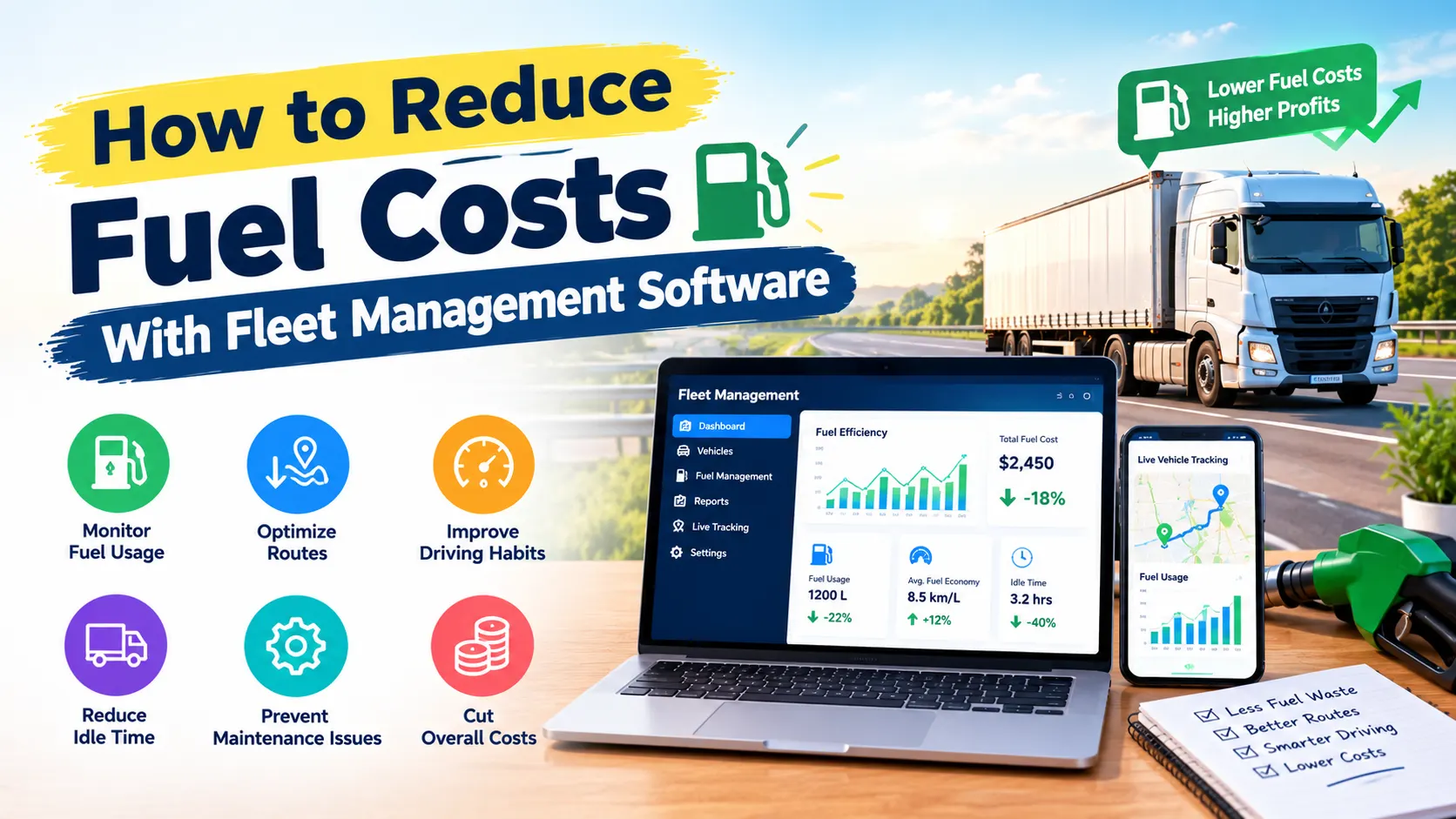





Fuel is the largest running cost in any transport business, and the one nobody can fully account for.
You see the total at month end. What you cannot see is where it went.
Some of it burned at a loading point with the engine running. Some drained out at a dhaba on the highway. Some was wasted because a truck ran four hundred kilometres on soft tyres.
This guide covers the seven things fleet management software does about that, what to look for when buying, and how to tell whether it is working.
Most transporters manage fuel through refuelling slips and the odometer. The slip says how many litres went in. The odometer says how far the truck went. Divide one by the other and you get mileage.
That number hides everything useful. It cannot tell you whether the shortfall came from a heavy right foot, an hour of idling at a checkpost, or fuel that never reached the tank.
Fuel is also the easiest cost to lose quietly, because every leak is small. Ten litres here, twenty there, spread across thirty trucks and three hundred trips. None of it is big enough to notice on its own.
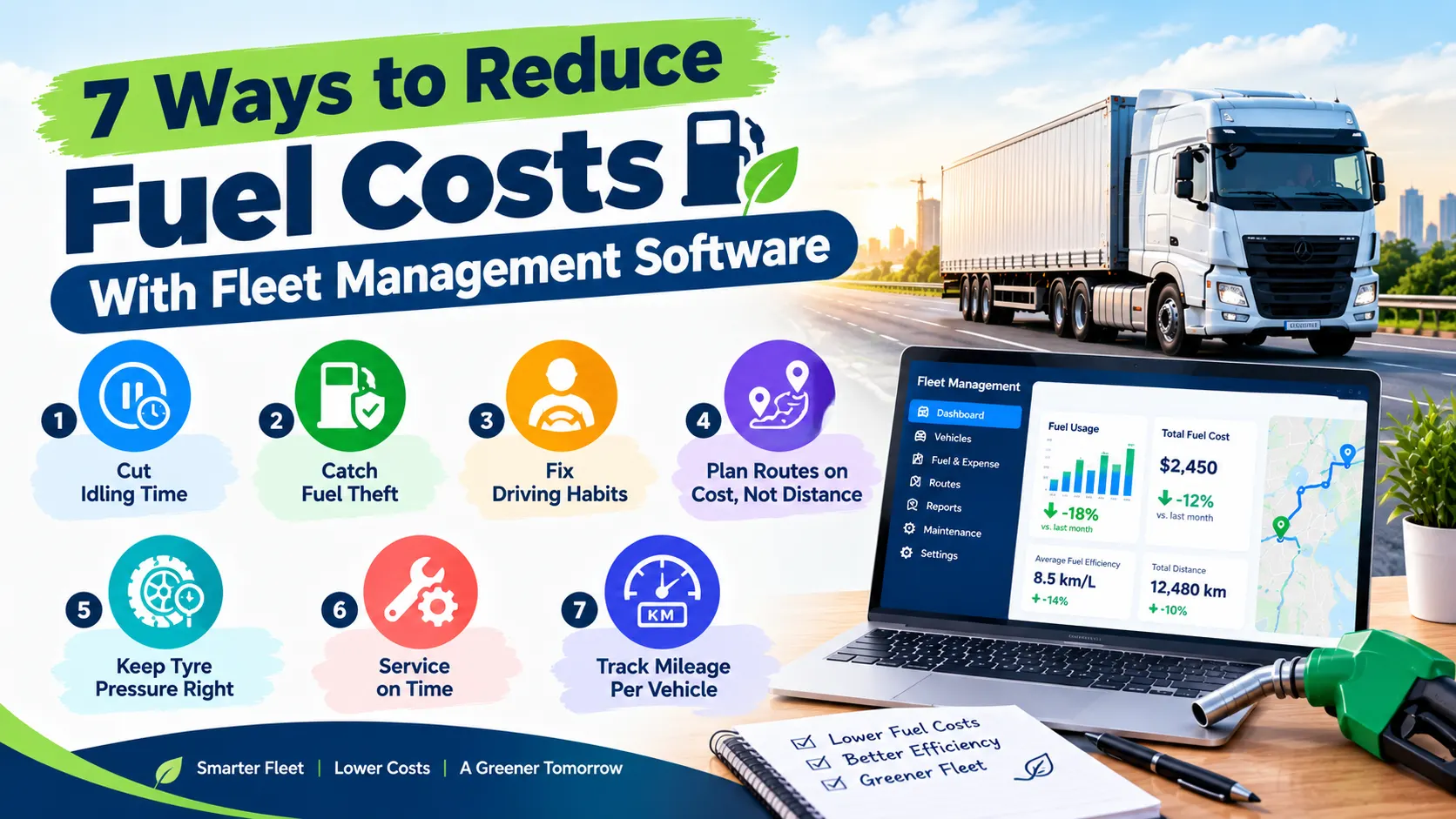
Each one closes a specific leak. Start with whichever is costing you most.
A truck with the engine running and the wheels still is burning diesel for nothing.
It happens at loading points, at checkposts, outside dhabas, and in traffic. Drivers leave the engine on for the air conditioning, or because restarting feels like a bother.
A fleet management system knows when the engine is on and whether the truck is moving, and totals the idle hours per vehicle per day. Once you can see that a particular vehicle idles three hours a day and another idles twenty minutes, you have a conversation worth having.
This is the leak most operators suspect and few can prove.
With a fuel sensor fitted to the tank, the software records the level continuously. A refill shows as a sharp rise. A drain shows as a sharp drop, with a time and a location attached.
A drop of forty litres at 2am while the truck is parked is not consumption. Without a sensor you are trusting the slip, and the slip only proves that fuel was bought.
Hard acceleration, heavy braking and sustained over-speeding all cost diesel. Two drivers on the same route in the same truck can return mileage figures ten percent apart.
Fleet management software records each event with a driver name against it. That turns a vague complaint into a weekly report somebody has to answer for.
These habits are also what causes accidents, which is why fleet risk management software and fuel tracking usually sit on the same platform. One set of data solves both problems.
The shortest route is not always the cheapest. A longer highway run can beat a shorter one through town once you count stop-start traffic, hills and the time lost at every crossing.
Good logistics fleet management software plans on historical trip data rather than map distance alone, and flags when a driver takes a different road than the one assigned.
Repeated deviations on a lane are worth looking at. Sometimes the driver knows something the map does not. Sometimes he is making a personal stop on your diesel.
A soft tyre drags harder against the road, and the engine burns extra diesel to pull it along. This is the cheapest saving available to any fleet, and the one most often ignored.
Platforms with a tire management system track pressure, rotation and tread depth per vehicle. You get the reminder before a check is due, not after a tyre fails on the highway.
The same data tells you which lanes are chewing through rubber fastest, which is a separate cost worth knowing.
A clogged air filter, a worn injector or an unserviced engine burns more diesel to do the same work. None of it shows up as a breakdown until much later.
Fleet maintenance management software schedules service by kilometres run or engine hours rather than by whoever remembers. Our fleet maintenance checklist sets out the twelve checks that matter most.
Fleet averages hide problems. One truck returning poor mileage pulls the average down slightly, and nobody investigates because the overall figure still looks acceptable.
Per-vehicle data makes the outlier obvious. From there it is usually one of three things: the vehicle needs work, the driver needs a word, or the route it runs is harder than you thought.
Five checks to run on any fleet management software you shortlist, in the order they matter.
Without a sensor you get idling and driving data but no visibility into the tank itself. Ask which sensors the platform works with and what the hardware costs, because it usually sits outside the quoted price.
Most Indian fleets already run tracking devices. Replacing them across thirty trucks is an expense nobody mentions during a demo.
Most fleet management software India transporters buy already connects to the common vendors. Ask for the named list in writing before you commit.
Litres burned is useful. Fuel cost against freight earned on that trip is what tells you whether a lane is worth running.
A platform that messages you about every two-minute idle becomes noise within a week, and your team stops looking at it. Check that you can set your own thresholds.
Fuel data is more useful sitting beside trip records, maintenance history and billing. Any fleet management system India transporters shortlist should cover all four rather than fuel alone. Our guide to the best fleet management software for Indian transporters compares the platforms that do this well.
Record these five before your fleet management software goes live, then again after two full months. Without a baseline you will never know what changed.
| What to measure | Where it comes from | What it tells you |
|---|---|---|
| Kilometres per litre, per vehicle | Odometer and fuel sensor | Which trucks are the problem |
| Idle hours per day | Engine on, wheels not turning | Diesel burned going nowhere |
| Fuel cost per trip | Litres burned against the trip record | Whether a lane actually pays |
| Litres filled against litres burned | Refuelling entries and sensor data | Whether fuel is going missing |
| Harsh driving events per driver | The tracking device | Who needs coaching |
Good fleet fuel management software shows all five on one screen rather than making you pull three reports to compare them.
Two months is the realistic window. The first few weeks are spent getting drivers used to being measured, and that period alone usually moves the idling number.
Fleet management software does not save diesel on its own. It makes the waste visible, and that is what lets somebody act on it.
Start with the leak that fits your situation. If your trucks sit at loading points for hours, start with idling. If mileage varies wildly between drivers on the same route, start with driving behaviour. If the figures have never matched the slips, start with a fuel sensor.
Diesel is one of five places money quietly leaves a transport business. Our breakdown of hidden fleet costs covers the other four.
LogiBrisk brings fuel, tyres, maintenance and trip costs onto the same platform, and connects to the GPS devices most Indian fleets already run. If it makes your shortlist, bring a month of your own refuelling data to the demo.
It makes the waste visible. Idle hours, harsh driving, route deviations and tank level are recorded per vehicle, so you can see where diesel goes instead of guessing from a monthly total.
Yes, with a fuel sensor fitted. Every sharp drop in tank level is logged with a time and a location, so a drain while the truck is parked stands out against normal use.
GPS alone gives you idling, speeding and route data, which covers most of the waste. Fleet fuel management software with a tank sensor adds the one thing GPS cannot see, which is the only way to prove theft rather than suspect it.
The engine burns diesel while the vehicle covers no distance, so every litre is pure loss. Three hours of idling a day across a thirty-truck fleet adds up to a meaningful monthly figure.
Yes. An under-inflated tyre makes the engine work harder to move the same load, and that extra effort is paid for in diesel. A weekly pressure check costs nothing and pays back on every trip.
There is no single best. Judge platforms on sensor support, GPS compatibility and cost-per-trip reporting, then shortlist two and run a month of your own data through each before deciding.
Usually yes. Indian platforms are built to work with the tracking devices already on the road here. Confirm your vendor is supported before buying, because replacing hardware across a fleet is an expensive surprise.
Expect two months to see a reliable figure. Idling improves fastest, often within weeks of drivers knowing it is tracked. Maintenance and route gains take a full cycle to show.
Often yes. Ten trucks waste fuel at the same rate per vehicle as a hundred. The total saving is smaller, but the cost per truck of the software is usually smaller too.