Transportation Software
TMS vs Fleet Management Software: Which Is Right for You?
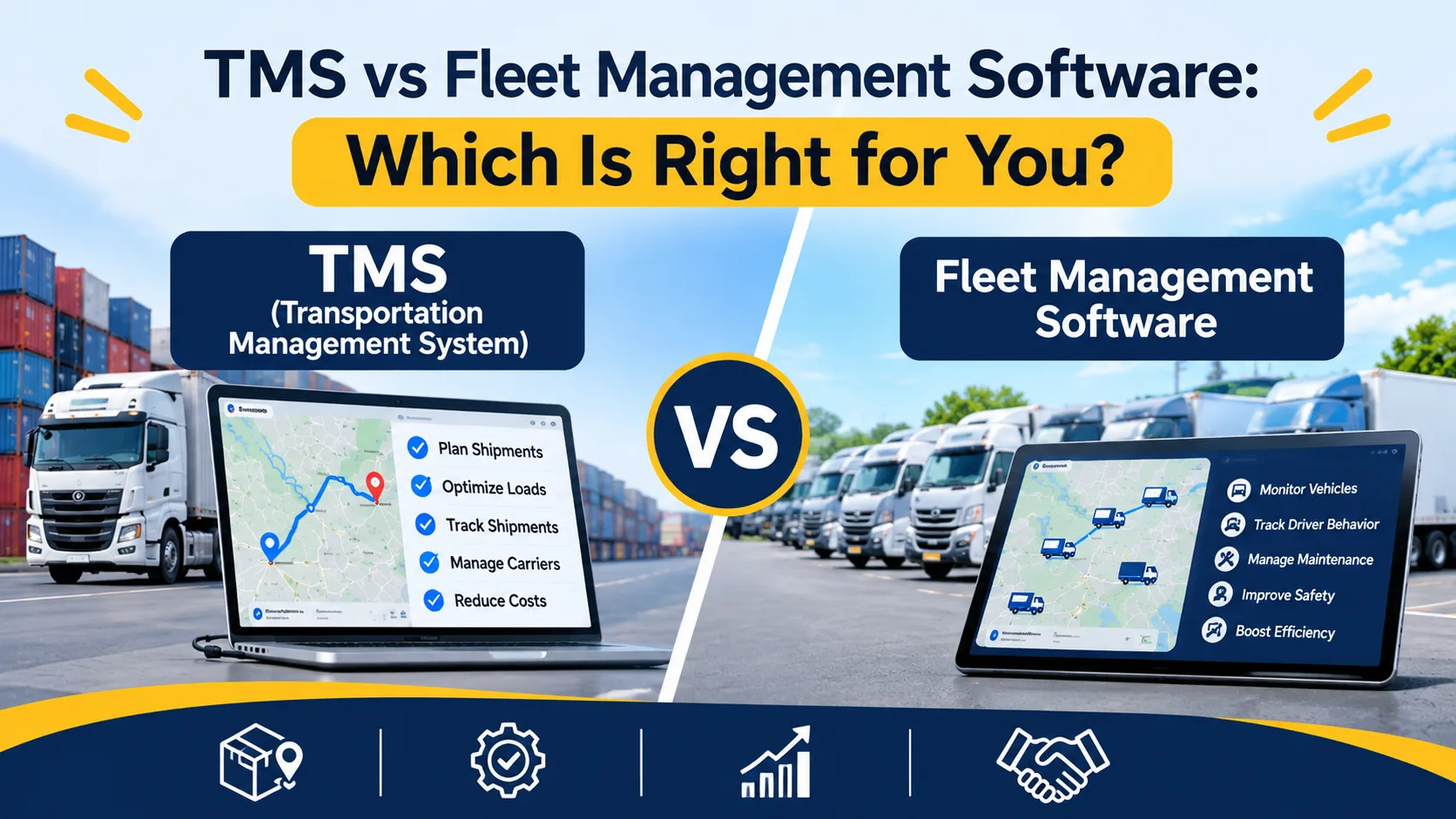





TMS and fleet management software sound alike, but they solve different problems. A TMS (transportation management software) manages orders, trips, billing, and delivery tracking. Fleet management software manages your vehicles, fuel, drivers, and servicing. In short, a TMS looks after the goods, and fleet software looks after the vehicles.
It is easy to buy one when you really need the other. A transporter who loses money on late billing may buy a vehicle tracking tool and find the billing problem still there. Another who loses money on fuel and breakdowns may buy an order and trip system and find the trucks still running badly.
This guide explains both tools in simple words, shows how they differ, and helps transport businesses in India decide which one fits today. If you own vehicles and also take many orders, you may need both.
TMS stands for transportation management software. You may also see it called transportation management system software or simply transport software. A TMS plans, runs, and tracks the movement of goods. In India, transporters use TMS software to look after everything around a shipment, from the moment a customer books a load to the moment you get paid.
Think of a transport office without a TMS. Orders come in by phone and WhatsApp. Someone writes the details in a register. Trips are planned on paper. When a customer asks where the goods are, a clerk calls the driver. After delivery, the signed proof of delivery has to be found in a pile of papers before the bill can go out. A TMS puts all of this in one place.
Good TMS transportation software helps you:
A TMS is useful even if you own no vehicles, because it manages the shipment, not the truck. Brokers, 3PL (third-party logistics) companies, and transporters who hire vehicles from others all use it for this reason. Many Indian buyers search for transport management software in India when they want to replace registers and spreadsheets.
Fleet management software, also called a fleet management system, looks after your vehicles and drivers. It does not focus on the customer's order. It focuses on the truck, the driver, and how well both are running.
Think of a fleet owner without this software. Trucks leave in the morning, and the owner only finds out where they are when the driver picks up the phone. Fuel bills keep rising, but nobody can say why. A truck breaks down on the highway because its service date was missed. Fleet management software gives the owner a clear view of every vehicle and driver, without phone calls.
Good fleet management software helps you:
Logistics fleet management software brings these tools together for companies that move goods on many routes. A good fleet management system in India should also be easy for drivers to use on a basic phone.
Fleet software only works if you own or run vehicles, because it manages the vehicles themselves. If you hire every vehicle from outside, there is little for it to track.
The easiest way to see the difference is to compare what each one manages, who uses it, and what problem it solves.
| Point | Transportation Management Software (TMS) | Fleet Management Software |
|---|---|---|
| What it manages | Orders, trips, shipments, and billing | Vehicles, drivers, fuel, and servicing |
| Main question it answers | "Where is my shipment, and has it been billed?" | "Where is my vehicle, and how is it running?" |
| Who uses it most | Transporters, 3PL (third-party logistics) companies, brokers, and shippers | Fleet owners and vehicle operators |
| Key features | Order booking, load planning, tracking, POD, GST billing | Live vehicle tracking, fuel control, driver management, maintenance alerts |
| Main benefit | Faster delivery and faster payments | Fewer breakdowns and better control of vehicles |
| Needs your own vehicles? | No | Yes |
Here is how the difference looks on one real trip. A truck leaves Ahmedabad with 10 tonnes of goods for Delhi. The TMS knows the customer, the load, the delivery date, and the bill. The fleet software knows the truck's location, its speed, how much fuel it has used, and how the driver is driving. Both are looking at the same trip, but they answer different questions.
That is why one cannot do the other's job well. A TMS cannot tell you that a truck is wasting fuel. Fleet software cannot create a bill or collect proof of delivery.
Read the points below and find the one that sounds like your business. Do not choose by features alone. Choose by the problem that hurts you most today.
If three or more of these sound familiar, your main problem is order and shipment handling. A TMS will solve it faster than any vehicle tool. Not sure how a TMS works day to day? Read our complete guide to TMS software.
If three or more of these sound familiar, your main problem is vehicle control. Fleet software will give you the clearest and fastest improvement.
Looking for the best fleet management software? Do not judge by features alone. Pick the one that solves your biggest vehicle problem, whether that is fuel loss, breakdowns, or risky driving.
Own vehicles and take many orders? You may need both. LogiBrisk offers transportation management software in India and fleet management software in India on one platform, and the FAQ below shows how they work together.
A TMS and fleet management software are not the same, and they are not rivals. A TMS manages your orders, trips, and billing. Fleet management software manages your vehicles, drivers, and fuel.
Start with the problem that costs you the most today. If you own vehicles and take many orders, plan to use both. Test any software with your own real trips before you decide.
You can start with what you need most and add the rest later. Schedule a free consultation to see how it fits your business. You can also read our list of the best transportation management software in India.
Yes. Many transport businesses use both, because each one does a different job. A TMS manages orders, trips, and billing. Fleet management software manages vehicles, fuel, and drivers.
Here is how they work together on one trip:
Some platforms, like LogiBrisk, offer both in one place, so you do not need to join two systems together.
A TMS manages shipments, orders, trips, and billing. Fleet management software manages vehicles, drivers, fuel, and servicing. One focuses on the work you do for the customer, and the other focuses on the vehicles that do the work.
Yes, If you use hired vehicles or other transporters, a TMS alone can handle your orders, tracking, and billing. Fleet software matters most when you own and run your own vehicles.
Not fully, Fleet software shows where your vehicles are and how they are running, but it does not manage customer orders, proof of delivery, or billing. For those jobs, you need a TMS.
No, An ERP manages the whole business, such as accounts, HR, and stock. A TMS focuses only on transport work like orders, trips, and delivery. Many TMS tools connect with ERP and accounting software such as Tally.
Start with the one that fixes your biggest problem. If you own a few vehicles and fuel and breakdowns hurt most, begin with fleet software. If orders and billing are the problem, begin with a TMS. You can add the other one as you grow.
Yes, LogiBrisk offers transportation management software and fleet management tools on one platform, so you can use one or both.