E-commerce Management
Top 7 Common E-commerce Order Management Mistakes to Avoid
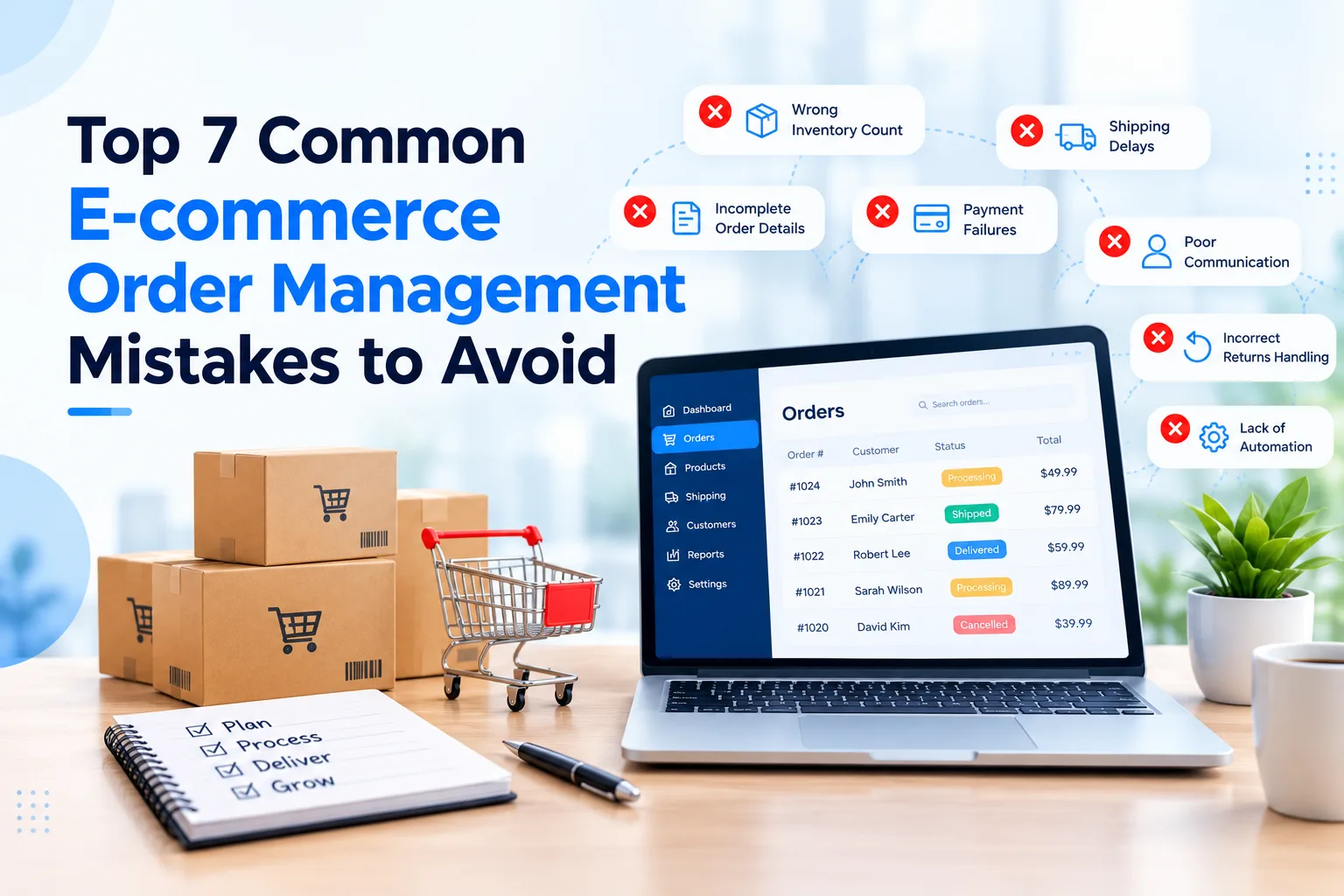





Effective e-commerce order management in India helps online sellers send the right product on time and keep customers happy. When it goes wrong, sellers lose money. They sell items that are already out of stock, ship the wrong products, deliver late, or get Cash on Delivery (COD) orders back as returns.
For example, say you sell the last pair of sneakers on Amazon India and on your Shopify store at the same time. One of the two orders has to be cancelled. That means an unhappy customer and a lower seller rating.
This guide covers five common order mistakes and simple steps Indian online sellers can use to avoid them in 2026.
Key Takeaways
E-commerce order management in India is the process of receiving, processing, shipping, and delivering online orders, including Cash on Delivery (COD) orders, GST invoicing, and courier tracking. It covers every step from the moment a customer buys on your website, Amazon, or Flipkart until the parcel reaches their door.
How it works, step by step:
The process is the same whether you sell 10 orders a month or thousands a day across many platforms.
Managing orders properly helps online sellers deliver products on time, avoid mistakes, and keep customers happy. When orders are handled manually or without a proper order management system, small mistakes can lead to bigger problems.
Many online sellers manage inventory levels separately inside each sales portal. When an item sells on Flipkart, staff must manually lower stock numbers on Shopify and Amazon.
If a sales surge happens during peak festive sales, staff cannot update stock fast enough, resulting in double sales for out-of-stock items.
Relying on manual paper lists causes order pickers to grab the wrong item, color, or garment size from warehouse racks. Staff waste valuable minutes searching through shelves without clear bin location markers or organized stock codes.
When Indian online brands scale up using E-Commerce Management Software, warehouse teams receive digital pick lists sorted by exact shelf location.
Copying buyer delivery addresses by hand onto courier portals creates frequent typos in pin codes and landmark details. Incorrect delivery addresses cause failed delivery attempts, delayed orders, and extra courier chargebacks.
Online businesses that adopt modern E-commerce Delivery Management Software generate bulk courier labels with verified pin codes in a single click.
Customers expect clear shipping updates immediately after completing an online order. When sellers fail to send tracking links promptly, customer support teams get overwhelmed with repetitive inquiry messages asking about parcel location.
You can review our simple guide to e-commerce management software to see how live status triggers help build long-term buyer trust.
Mastering e-commerce order management requires aligning warehouse dispatch times with road transport. When warehouse dispatches do not align with transport schedules, packed parcels sit idle on loading docks for hours waiting for trucks.
Integrating warehouse operations with transportation management software ensures long-haul trucks arrive exactly as warehouse dispatches finish packing.
Managing orders from your website, Amazon, and Flipkart can become time-consuming when you handle each channel separately. You need to check orders, update stock, track shipments, and manage returns across different accounts. An e-commerce management system helps bring these tasks together in one place.
LogiBrisk E-commerce Management Software helps online sellers manage orders and inventory from a single dashboard. Here’s how it can make daily order management easier:
Indian transport and logistics teams using complete logistics management software keep supply chains moving without dispatch errors. You can schedule a free consultation today to see how digital order workflows streamline your online sales.
Fixing order processing mistakes can help online sellers improve profits, avoid delays, and keep customers happy. With e-commerce order management software, businesses can update stock, manage shipping labels, track orders, and keep customers informed about their deliveries.
Looking to make your daily order management easier? Schedule a Demo to see how LogiBrisk can help you manage orders more efficiently and simplify your online store operations.
It is the process of receiving, tracking, packing, and delivering orders from your website, Amazon, Flipkart, and other sales channels. It helps keep stock levels accurate and ensures orders are shipped on time.
Sellers use order management software to update stock automatically across connected platforms like their website, Amazon, and Flipkart. This helps prevent selling products that are no longer available.
Pick lists show warehouse staff where products are stored, helping them find items quickly. Barcode scanning during packing can also help check products and reduce packing mistakes.
Order management software can help organise dispatch, track shipments, and coordinate deliveries. Some systems also support route planning to help reduce delivery times and improve customer satisfaction.
Some order management systems can generate and track E-Way Bills automatically. This helps sellers manage shipping paperwork and avoid unnecessary delays when transporting goods between Indian states.
Many platforms integrate with accounting software like Tally and other ERP systems. These integrations help keep order and financial records in sync and reduce manual data entry.
A growing online brand should consider order management software when managing orders across different seller accounts takes too much time or leads to stock errors and delayed shipments.