Fleet Management
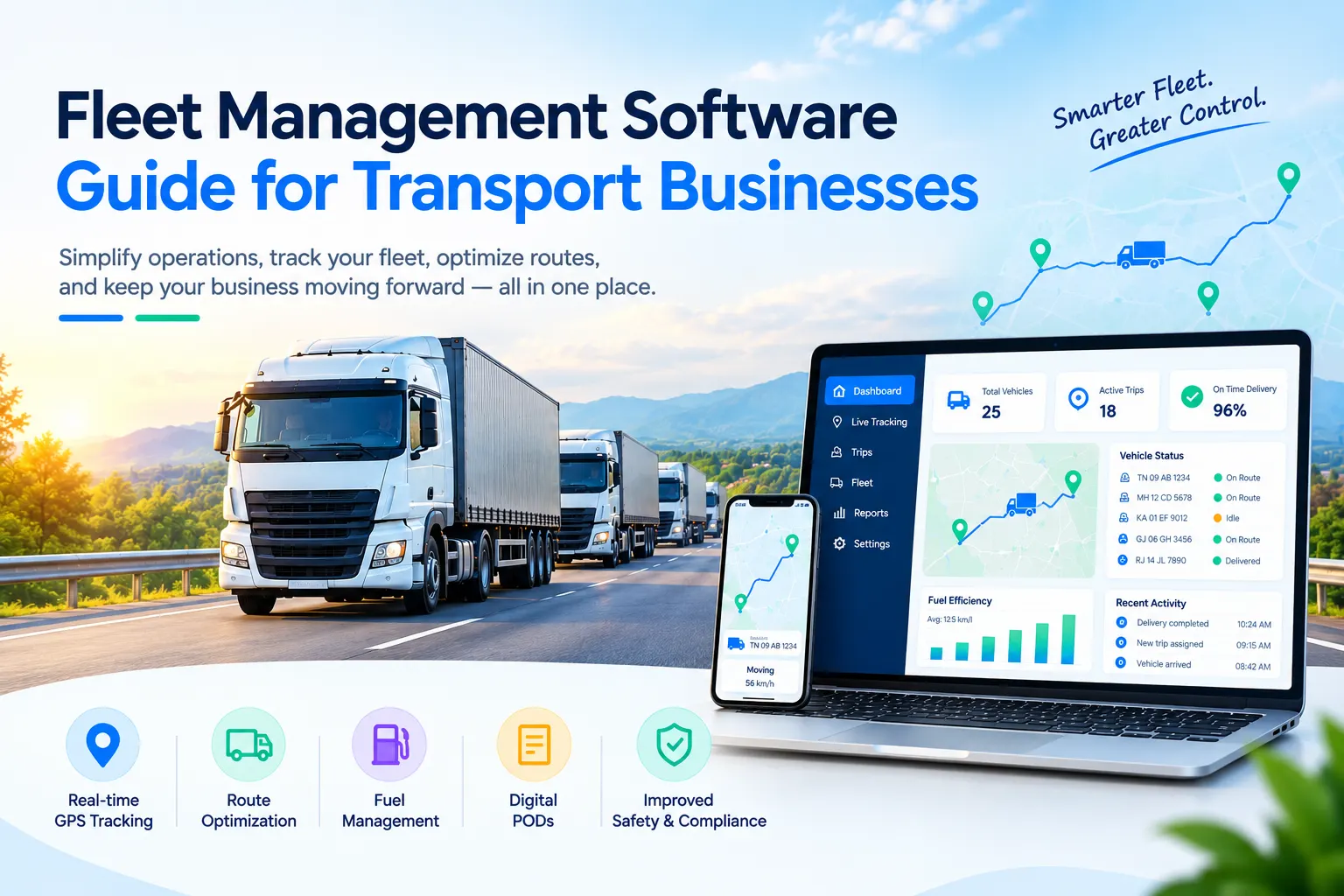
Fleet Management Software Guide for Transport Businesses
Your truck breaks down outside Bharuch at 2 AM. The driver calls. You arrange a mechanic, the load reaches a day late, and the client is on the phone by nine.
A week later you find out the service was due 4,000 km ago.
Nobody forgot on purpose. It was written in a diary, and the diary is in somebody else's drawer. That is how most fleets lose money. Not in one big mistake, but in small things nobody was tracking.
This guide explains what fleet management software does, which parts actually save you money, and how to pick one that suits an Indian transport business.
Fleet management software keeps everything about your vehicles in one place. Where each truck is, when it was last serviced, how much fuel it burned, who drove it, and which papers are due.
None of that information is missing from your business today. It is just sitting in a GPS app, a diary in the garage, a file of bills, and somebody's memory, with nothing checking one against another.
None of these feel expensive on the day. That is why nobody notices them.
With ten trucks, one good supervisor catches all five. With thirty, nobody can.
How many of these happen in your yard?
The service was due. It was written somewhere. Nobody saw it in time.
Now you are paying for towing, a lost day, and a client who got his load late.
Every one of these has an expiry date, and every one can stop your truck:
Fitness certificate
National and state permits
Insurance
PUC
Road tax
You pay the fine, and the truck sits there while you sort it out.
Same road, same load, same distance. One gives you much less than the other.
You can guess why. Driver, load, tyres, idling. What you cannot do is prove it, so nothing changes and the fuel keeps going.
Ten minutes gone. Then the driver does not pick up, so it is twenty.
Do that a few times a day and your client starts wondering if you know what is happening with his goods.
You know what the business earned. You do not know what each truck earned.
Most fleets have one vehicle quietly losing money every month. Without the number, you keep running it.
If three of these sound familiar, your spreadsheet has stopped working. The bill just has not arrived yet. Our fleet management software page shows how each of these five is handled.
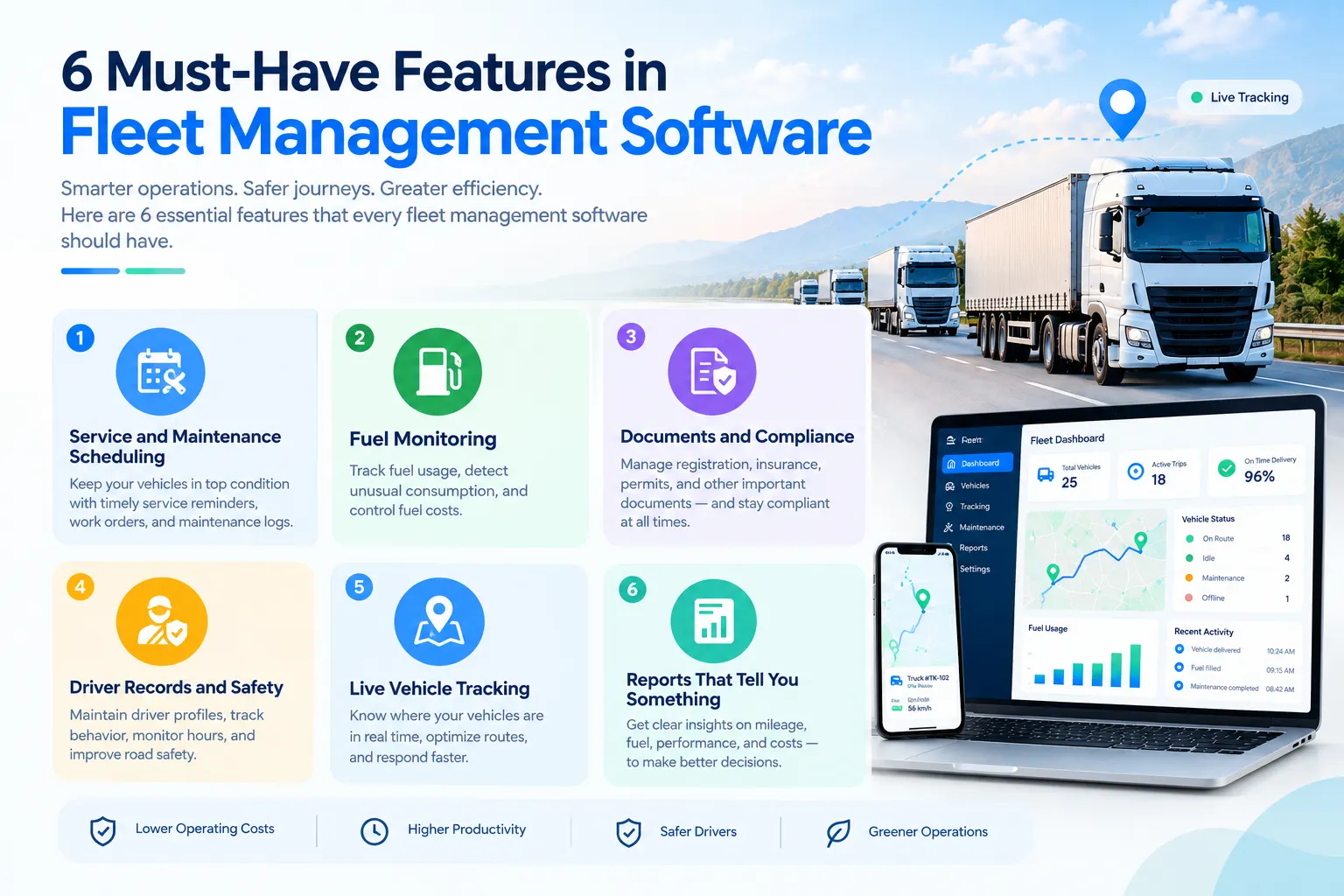
Most products sell themselves on tracking. Tracking is the easy part. These are the pieces that change your numbers.
This is the part that pays for itself first.
Fleet maintenance management software counts service by kilometres run, not by date, and tells you before a vehicle is due. Tyres, battery, oil change, and major services all sit on one calendar.
A planned service costs you a day you chose. A breakdown costs you a day the road chose, plus the towing, plus the late delivery, plus the client's patience.
Our guide to fleet maintenance software goes deeper into setting intervals and tracking parts.
Fuel is usually your biggest cost and the one you have the least proof about.
Fleet fuel management software records every filling against the vehicle and the trip, then shows you kilometres per litre per truck. When one vehicle on a regular route suddenly drops, you see it in the report instead of hearing about it a quarter later.
It also makes pilferage visible. Not by accusing anyone, but by showing a pattern that does not match the route.
We broke down where this money actually disappears in our piece on hidden fleet costs.
You have already seen that list in Sign 2. Every one of those dates can stop a truck at a check post.
The software holds each document against the vehicle and warns you weeks before expiry. Pair it with a GST and E-Way Bill enabled logistics system and the trip papers are covered in the same place.
Fleet risk management software logs who drove which vehicle, their licence validity, and how they drove.
The software records how each driver actually drives:
Speeding
Harsh braking
Long idling with the engine running
Stops that were not on the route
Over a few months you can see which drivers are costing you fuel and which are costing you tyres.
That is not about catching people out. It is about having a number to discuss instead of an argument about who is at fault.
You probably have GPS already. The difference is having it on the same screen as the service record and the fuel data, instead of in a separate app nobody opens.
The useful part is not watching dots move. It is answering a client in ten seconds instead of three phone calls. And seeing a truck parked for two hours before the driver thinks to mention it.
If you are starting from scratch here, our guide to GPS fleet tracking covers how the device and the software fit together.
The report that matters most is cost per vehicle. What each truck earned, what it cost in fuel and repairs, and what it actually brought you.
Most owners have never seen this number per truck. When they finally do, it usually explains something they had been blaming on the market.
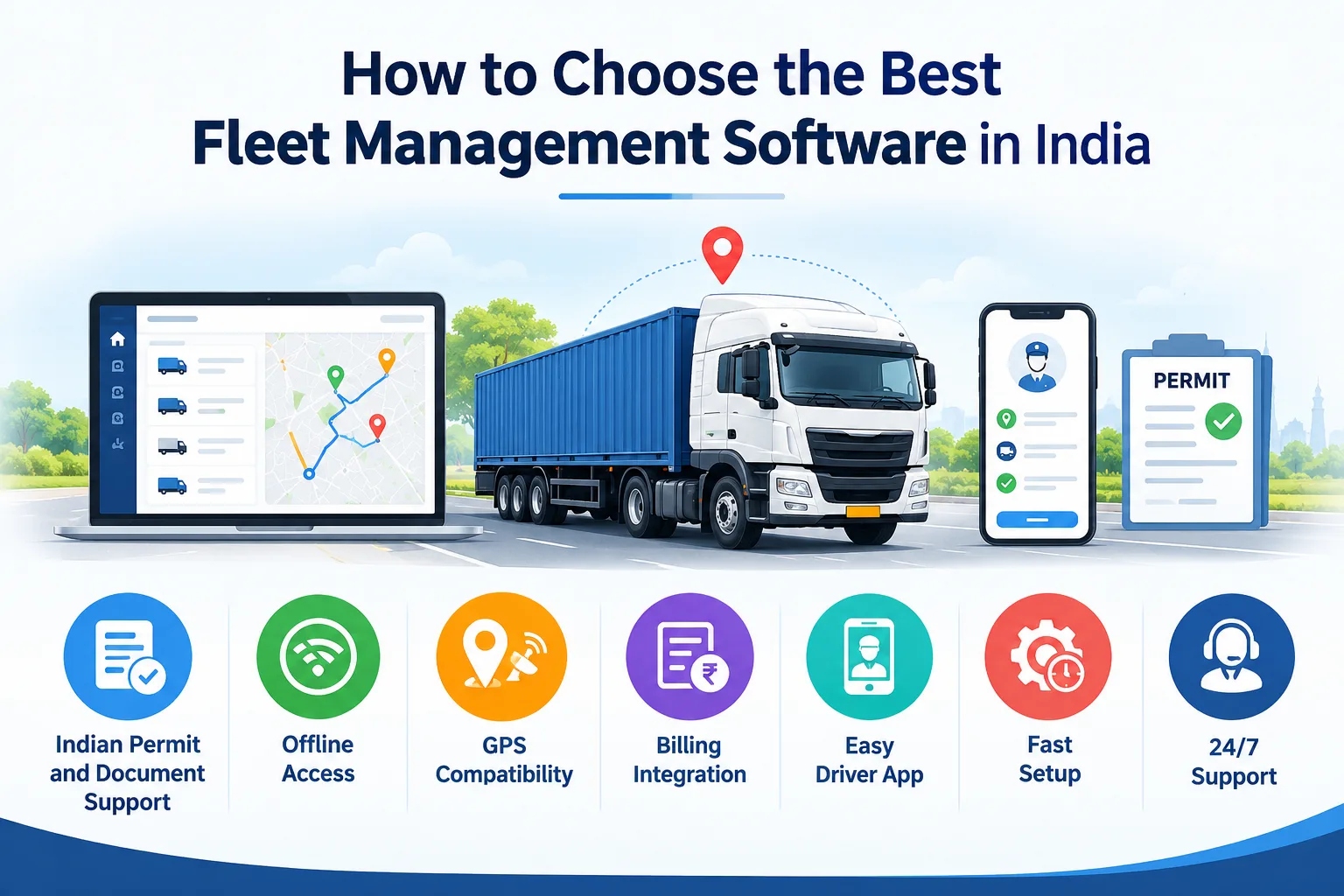
In a demo, most logistics fleet management software looks the same. The difference shows later.These are the points that separate them once you are running on it:
Tick six of those seven and you are looking at the best fleet management software for your kind of operation. If you want a shortlist rather than a checklist, we compared the options in our guide to the best fleet management software for Indian transporters.
The smart fleet management system covers real-time vehicle tracking, fuel management, driver behaviour monitoring, and automated maintenance scheduling.
It works with the GPS devices you already have, because it connects to the major Indian GPS vendors. You are not fitting new hardware across the fleet.
Every trip moves through six stages: Reported, Loaded, Departed, In Transit, Arrived, Delivered. Your client sees where his load is without calling your office.
Drivers use a mobile app to update trip status, upload PODs, and record expenses. E-Way Bill validity is tracked through the trip, and invoices generate automatically once delivery is confirmed.
Most transporters come to us because they do not want to replace their GPS or run two systems side by side. That is usually what decides it.
The value is clearest for these operations:
Fleet owners with 25 trucks or more, where one person can no longer remember every service date and paper renewal
FTL and PTL operators on fixed routes, where the fuel figure for one truck decides whether that lane makes money
3PL providers who have to show clients where a load is and prove delivery, without calling a driver each time
E-commerce and last-mile fleets running many vehicles on short trips, where route optimization software and vehicle data work best together
Anyone running mixed vehicle types, where each category has its own service cycle and permit rules to follow
Do not believe anyone, including us. Check it yourself tonight. Ten minutes.
Open last year's records and count the days you lost to these four:
A truck stood still because it broke down
A fine or delay because a paper had expired
A truck waiting for a repair or a spare part
A load you said no to, because you did not know which truck was free
Add up the days. Multiply by what one truck earns in a day. That is what last year cost you.
Now put the software price next to it. Bigger? You have your answer. Smaller? You do not need this yet.
Under ten vehicles with one person who keeps good track, paper still works. We would rather say that than sell you something you stop using in three months.
A fleet management system India transporters can actually use is not exciting. It just stops the same four problems repeating.
See what your trucks are really costing you. Book a free demo with Logibrisk and find out which vehicle is losing money.
It keeps vehicle tracking, service schedules, fuel records, driver history, and document expiry in one system, so you see a problem before it stops a truck rather than after.
Below 10 vehicles, careful records usually cope. Past 25, it stops being optional, because missed services and expired papers start costing more than the software does. The best fleet management software for a small fleet is the one your team will actually open every day.
Good ones do. The driver app should store trip data on the phone when signal drops and sync automatically once it returns, which matters on most long Indian routes.
Usually yes. Ask the vendor to confirm your specific device model before you sign, because replacing hardware across a whole fleet is an expense nobody mentions in the demo.
Most Logibrisk customers go live within 5 working days. That includes loading your vehicle list, connecting existing GPS devices, and training your team.
Vehicles, drivers, fuel, maintenance, and compliance. Get those five right and the rest follows. Most fleets handle three of them well and lose money on the other two without noticing.