Fleet Management
What Is Fleet Management? A Simple Guide for Transporters
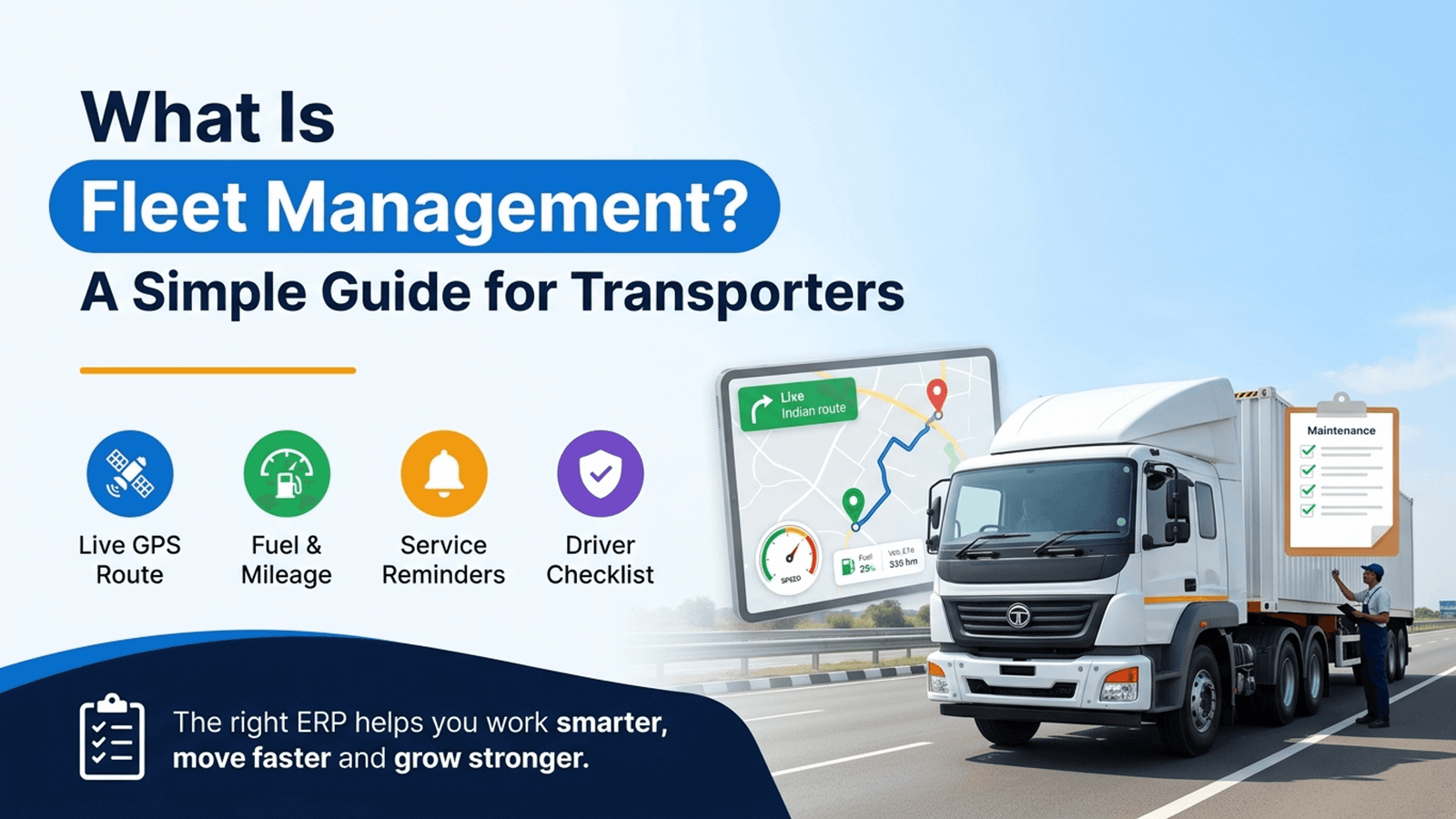





When your trucks are out on the highway, understanding what is fleet management can mean the difference between a profitable month and unexpected losses. Without a clear system, you spend your entire day making endless phone calls to drivers just to find out where a load has reached.
A single delayed truck stranded at a loading bay or a missing proof of delivery document can hold up payments for weeks. This guide explains how modern transport operations organize their vehicles, control running expenses, and build a stress-free business for 2026.
Key Takeaways
Fleet management is the structured process of overseeing commercial vehicles from initial pickup to final delivery. It combines location tracking, fuel monitoring, driver oversight, and vehicle maintenance into one clear operational workflow.
In daily transport work, it starts when you assign a vehicle to a booking. It keeps watching truck performance while on the highway and finishes when the driver uploads the signed receipt. Every step stays organized in one central place.
If you ask experienced operators what is fleet management, they will tell you it is the practical system of keeping trucks running efficiently. Whether you operate 5 pickup trucks or manage 200 multi-axle trailers, this system ensures every trip stays on schedule.
| Operational Task | Manual Phone & Paper Method | Modern Digital System | Business Impact |
|---|---|---|---|
| Location Tracking | Calling drivers repeatedly each day | Live GPS map on single screen | Faster client updates and peace of mind |
| Fuel Control | Collecting loose paper receipts | Automated fuel refill reports | Cuts sudden fuel loss and theft |
| Vehicle Repairs | Fixing parts after breakdown | Odometer service alerts | Prevents highway repair expenses |
| Document Renewal | Searching physical files for permits | Automatic expiry notifications | Zero RTO fines and trip delays |
To run a profitable logistics business, implementing a modern fleet management system gives you clear visibility over every vehicle you own. Reading a detailed Fleet Management Software Guide for Transport Businesses helps owners transition from manual paper registers to simple digital tracking.
Learning what is fleet management helps company directors spot money leaks across different branches. Here are the five core parts that make up a complete operational setup.
Knowing exactly where your vehicles are helps you answer customer calls instantly without disturbing your drivers on the road.
Fuel is the largest daily expense for any transport owner in India. Knowing How to Reduce Fuel Costs allows fleet owners to protect their profit margins against sudden diesel price changes.
Preventative maintenance keeps your trucks healthy and protects you from unexpected mechanical expenses. Following a structured Fleet Maintenance Checklist ensures your drivers catch minor issues before they turn into major engine repairs.
Your drivers represent your transport business on the highway. Monitoring driving habits ensures passenger safety, protects cargo, and lowers vehicle wear and tear.
Running a transport business requires keeping tax receipts, insurance papers, fitness certificates, and state permits up to date. Identifying Hidden Fleet Costs like late renewal penalties helps transporters save thousands of rupees each month.
As your business grows, managing operations through paper registers becomes difficult. Transitioning to dedicated software gives you complete control over trips, expenses, and vehicle health without increasing administrative staff.
The LogiBrisk Smart Fleet Management System helps Indian transporters replace manual guesswork with clear digital records. Transport teams use features such as service reminders by odometer, driver pre-trip checklist app, fuel and mileage reports, document expiry alerts, maintenance history per vehicle, cost per vehicle reports, and GPS trip tracking.
Using digital tools gives you complete clarity across all branches. You can review the Best Fleet Management Software for Indian Transporters to select a platform tailored to your regional transport routes.
Understanding what is fleet management helps transport owners build an organized, profitable logistics operation. By combining location tracking, maintenance schedules, and fuel monitoring, you protect your margin on every trip.
Moving from manual phone calls to a digital system saves hours of daily stress. Take control of your transport business today and start running every route with total visibility.
What is fleet management in logistics refers to organizing commercial trucks, driver schedules, fuel budgets, and vehicle maintenance to ensure smooth dispatches and timely cargo deliveries.
In India, a digital fleet management system typically costs between ₹150 and ₹400 per truck per month, depending on GPS integration, maintenance modules, and reporting features.
While not mandatory by law for all trucks, installing GPS tracking is essential for modern fleet management for transporters to prevent unauthorized stops and provide live location updates to clients.
Software reduces expenses by tracking mileage, alerting you before maintenance is due, flagging excessive idling, and preventing RTO fines through automated document expiry reminders.