Fleet Management
15 Benefits of Fleet Management for Lower Fuel Costs





Benefits of Fleet Management help truck owners stop wasting money on diesel every single day. Delivery drivers choose short routes so food stays warm and doesn’t waste fuel.
When trucks move freight on Indian highways, bad routes and traffic idling waste thousands of rupees. Smart truck tracking keeps fuel bills low and gets deliveries done on time.
Key Takeaways
Fleet management means running all your trucks from one central office. You’ll see where your vehicles move on a map in real time. So understanding the benefits of fleet management shows how routine checks keep trucks moving without wasting fuel.
Owners track driver speeds, check diesel levels, and set up oil changes before long trips. That way, vehicles don’t break down unexpectedly on the road. And this works whether you run 5 trucks in a family business or manage 200 trucks in a big fleet.
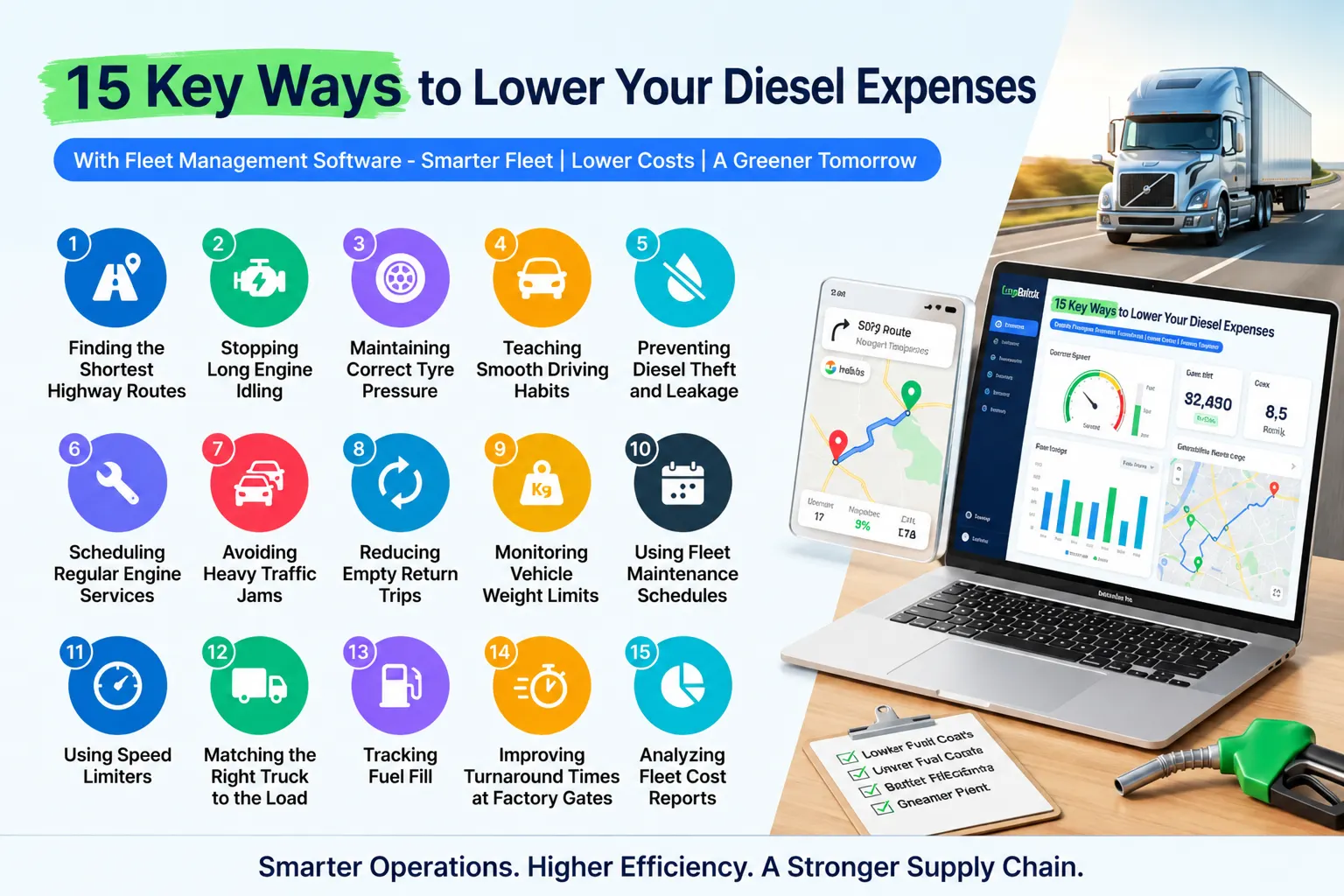
Taking long or wrong roads burns extra diesel on every run. So smart navigation tools show drivers the shortest clear path to their destination.
Trucks spend fewer hours on the road when trips are planned carefully. That’s how Fleet Management help fleet owners save money on every trip.
Drivers often keep engines running at factory gates or tea stalls. But an idling engine burns fuel without moving the truck anywhere. Seeing the benefits of fleet management while tracking idle time helps owners spot these hidden fuel losses fast.
Office staff get live alerts when a truck idles for more than 10 minutes. Then a quick phone call tells the driver to turn off the engine. That simple step keeps expensive diesel inside your tank.
Under-inflated tyres force the engine to work much harder just to push forward. But properly filled tyres roll smoothly and don’t waste diesel.
Hard braking and rapid acceleration burn fuel much faster than steady driving. So gentle driving keeps the engine relaxed and saves money on fuel.
Transporters who learn to Reduce Fuel Costs With Fleet Management Software monitor driver speed habits easily. Keeping speeds steady makes every trip safer and cheaper.
Fuel theft at quiet highway stops creates major losses for fleet owners. But digital fuel sensors alert your phone the second fuel levels drop unexpectedly.
Real-time fuel tracking gives transport operations clear control over fuel costs. It’s simple to match exact pump receipts with the actual fuel poured into the tank.
Old engine oil and dirty filters force trucks to drag, so they don’t burn diesel efficiently. Swapping filters on schedule keeps the engine running smooth and light.
Regular service stops small mechanical issues before they turn into expensive breakdowns. So healthy engines don’t waste fuel on steep highway climbs.
Sitting in slow gridlock burns diesel while trucks aren’t moving. Live traffic updates guide drivers around busy city congestion during peak hours.
Driving an empty truck back home burns diesel without earning freight money. So booking return loads before unloading fixes the problem completely.
Seeing the benefits of fleet management system tools helps dispatchers find nearby loads quickly. Every kilometre driven earns revenue and covers fuel costs easily.
Overloading a truck puts massive strain on the engine and axles. It doesn’t just waste diesel; an overloaded lorry damages tyres fast on hot pavement.
Checking cargo weight at loading bays keeps fuel use normal so you don’t face heavy RTO highway fines.
Following a strict maintenance routine keeps every vehicle in top condition. Using a clear Fleet Maintenance Checklist helps you catch worn parts before they’re able to drag engine performance down.
Driving above 80 km/h burns diesel much faster because of wind resistance. Automatic speed limiters keep trucks where they’re most fuel-efficient.
Realizing the benefits of fleet management in logistics isn’t hard when speed limits stay steady. Steady speeds protect drivers and keep diesel consumption low.
Sending a massive 14-wheeler truck to deliver a small 2-tonne cargo wastes fuel. Matching vehicle size to the consignment saves money right away because you aren’t burning extra diesel.
Comparing TMS vs Fleet Management Software helps managers pick the best vehicle for each dispatch so large trucks aren’t running half-empty.
Smart fuel cards let drivers buy diesel only at approved station pumps. It gets rid of fake paper bills and guarantees dirty fuel won’t enter your tank.
Trucks waiting at loading docks run engines so the air conditioning doesn’t cut off. Quick loading operations save hours of idle fuel burn.
Clear paperwork gets trucks through factory gates without delays so they’re back on the highway earning money.
Monthly reports show exactly which trucks burn the most fuel per kilometre so you aren’t left guessing. Seeing clear numbers helps you fix inefficient vehicles right away.
When you compare performance across your fleet, you’ll reduce overall fleet costs over time. Clear data helps you make smart decisions that protect long-term profit.
A lot of transport owners waste diesel simply because they don’t do daily checks. Reading about Uncovering Hidden Fleet Costs helps you spot and fix those leaks before they hurt your profits.
Tracking fuel savings across dozens of trucks with paper logbooks isn’t practical anymore. Modern software pulls data from your GPS trackers, fuel sensors, and service reminders directly onto 1 simple mobile app screen.
The LogiBrisk Smart Fleet Management System gives fleet owners full visibility over daily vehicle costs. You’ll get instant alerts for fuel theft, live location tracking, and clear maintenance schedules right on your phone.
And relying on the Best Fleet Management Software for Indian Transporters helps you lower trip expenses without adding extra office paperwork.
Cutting diesel expenses is still the quickest way to grow profits in the transport business. When you check tyre pressure daily, reduce idle time, and plan routes well, you’ll see how the benefits of fleet management save fuel on every trip.
Routine daily checks keep overall fuel bills down while keeping your fleet on the road.
The biggest gains come from shorter highway routes, less engine idling, consistent tyre maintenance, and steady driver habits. Small operational fixes like these cut monthly fuel bills across your entire fleet.
Live GPS tracking demonstrates the benefits of fleet management by preventing fuel theft along major routes. It also guides drivers around heavy traffic so trucks don’t waste diesel sitting idling in traffic jams.
Yes, small fleet owners save money on diesel, stop fuel theft, and keep engines running smoothly so they don’t have to hire extra office staff.
Turning off idling engines can save up to 2 litres of diesel for each truck every single day. So over a full month, those daily savings add up to a major difference across your fleet.