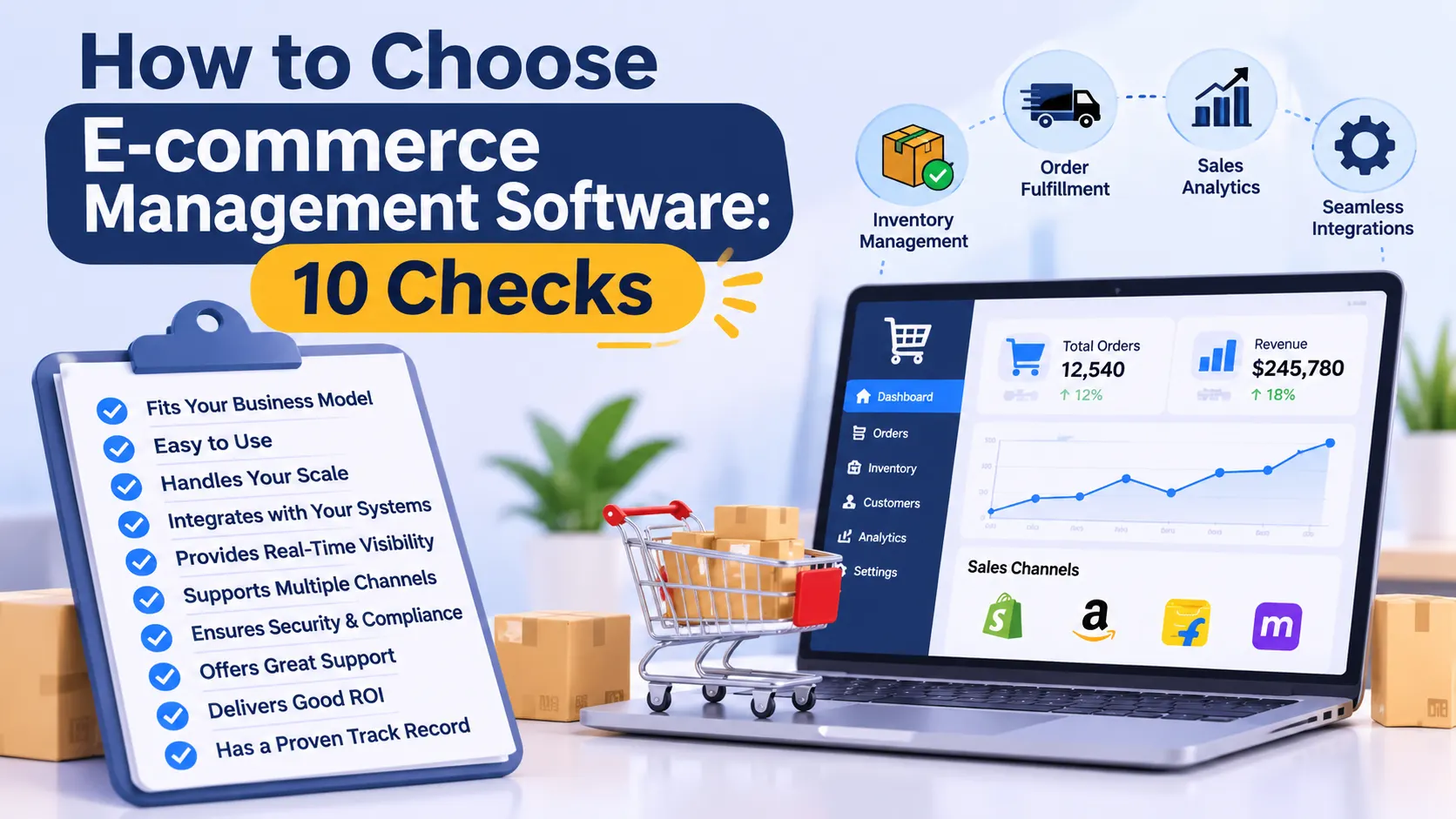





Your orders are coming in from everywhere. But who keeps track of them all? One comes from your website, one from a marketplace, one from Instagram. Soon the stock is wrong, a parcel is late, and a customer asks, "Where is my order?"
Ecommerce management software is one tool that keeps all your orders in one place. It also tracks your stock, delivery, returns and payments.
This guide gives you ten easy checks to find the right ecommerce management software. Use them to compare tools. It is for anyone who sells online in India.
Key Takeaways
- Ecommerce management software helps you handle all your orders from one screen.
- The right tool shows orders from every place you sell and keeps your stock count right.
- Check how it handles couriers, cash on delivery (COD) and returns. These cost you the most money when they go wrong.
- Pick a tool your team finds easy to use. It should also show the profit on each order.
- Try it with your own orders before you pay.
What Is E-commerce Management Software?
Ecommerce management software is one system that handles everything after a customer clicks buy.
It collects orders from every channel, tracks stock, picks the courier, follows each delivery, handles returns and matches payments. It is not the same as a store builder like Shopify, which shows your products and takes payments.
Ten Checks Before You Choose Ecommerce Management Software
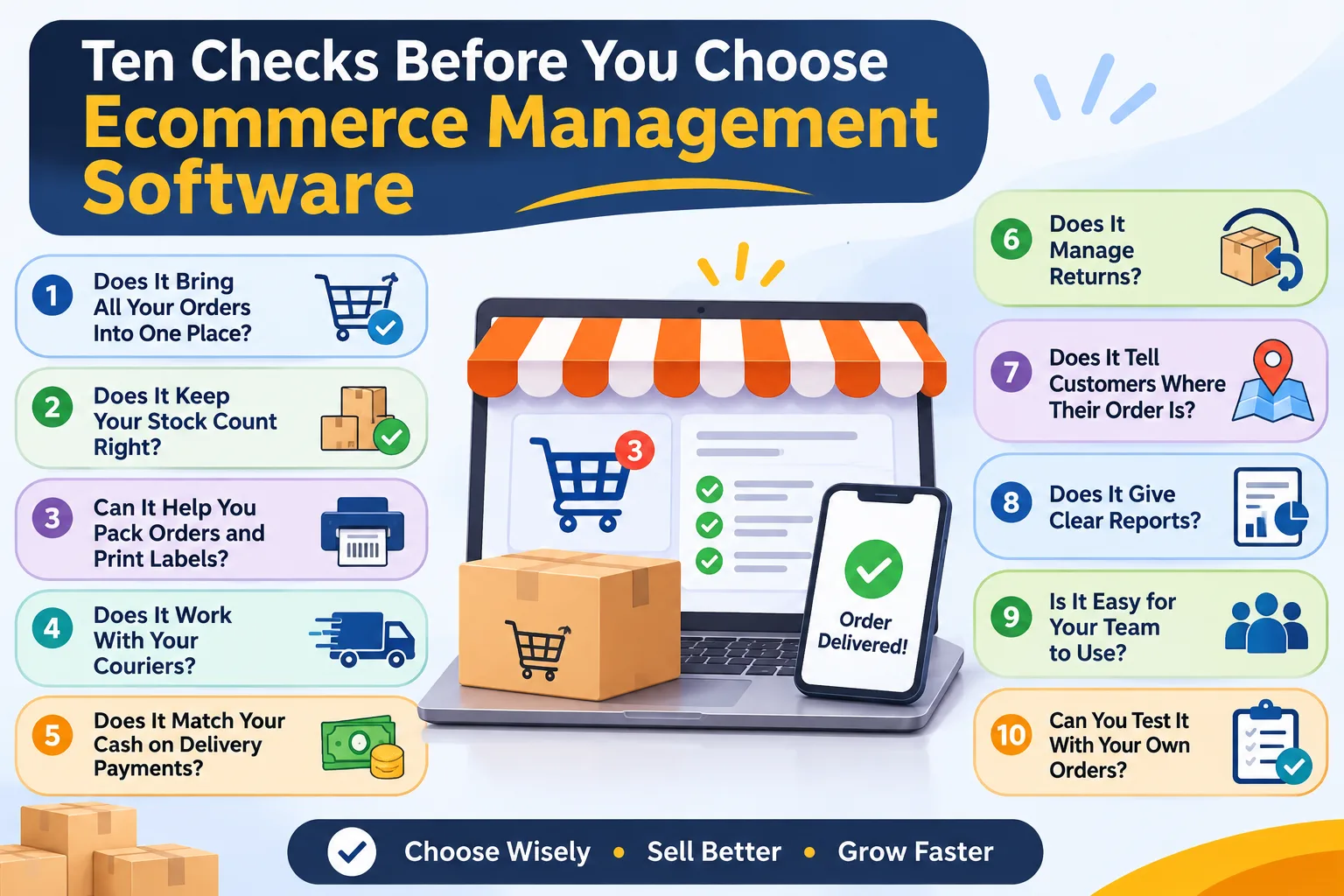
Score each tool on these ten checks. Want a shortlist first? See our list of the 10+ best e-commerce management software in India.
Check 1: Does It Bring All Your Orders Into One Place?
What to check: A good ecommerce management system connects to your website, marketplaces and social selling channels, and shows every order in one list.
Why it matters: You stop copying orders between screens, and no order gets missed.
Check 2: Does It Keep Your Stock Count Right?
What to check: When a product sells on one channel, the stock should update on all the others straight away.
Why it matters: Selling an item you do not have forces you to cancel orders and upsets customers. It is one of the most common ecommerce order management mistakes, and a correct stock count avoids it.
Check 3: Can It Help You Pack Orders and Print Labels?
What to check: Look for pack lists on screen and shipping labels that print by themselves.
Why it matters: Handwritten lists and typed addresses cause packing errors and failed deliveries.
Check 4: Does It Work With Your Couriers?
What to check: Good ecommerce shipping management software connects to your courier partners, lets you choose the courier for each order, and tracks every parcel from pickup to delivery. If you also run your own transport, see our guide to logistics software companies in India.
Why it matters: Do not judge on shipping rate alone. Compare the cost of each successfully delivered order, because returns can wipe out a cheap rate. Our guide on how to find the right ecommerce delivery software goes deeper.
Check 5: Does It Match Your Cash on Delivery Payments?
What to check: The software should match COD money to each order and flag late or short payments.
Why it matters: Without this, cash gets lost between the courier, the bank and your books.
Check 6: Does It Manage Returns?
What to check: It should record returns, show them by courier and area, and update stock when items come back.
Why it matters: A courier or area with many returns is easy to miss in a spreadsheet.
Check 7: Does It Tell Customers Where Their Order Is?
What to check: Customers should get tracking links and delay alerts without your team sending them.
Why it matters: You get fewer "Where is my order?" calls and happier buyers.
Check 8: Does It Give Clear Reports?
What to check: Look for reports on orders, courier performance, returns and profit on each order.
Why it matters: You can see what works and fix what does not, instead of guessing.
Check 9: Is It Easy for Your Team to Use?
What to check: Ask your packers and support staff to try it. A good ecommerce management platform should need very little training.
Why it matters: If your team avoids it, the data will be wrong.
Check 10: Can You Test It With Your Own Orders?
What to check: Before you pay for any ecommerce software, run real orders with your own products, couriers and delivery areas through a demo or trial.
Why it matters: A demo with clean sample data hides problems that real orders show.
Conclusion
The right ecommerce management software gives you one list of orders, synced stock, courier and COD control, easy returns, automatic customer updates and clear reports, in a tool your team likes to use.
Start with the problem that costs you the most, compare a few tools, and test each one with your own orders before you decide. New to this? Read our simple guide to ecommerce management software.
Want to see how it works? Schedule Free Demo.
Frequently Asked Questions
What Is Ecommerce Management Software?
Ecommerce management software is one system that handles everything after a customer clicks buy. It collects orders from every channel, tracks stock, picks the courier, follows deliveries, handles returns and matches payments.
What Does an Ecommerce Management System Do?
It brings your orders, inventory, shipping, returns and payments into one place, so your team stops using separate spreadsheets and dashboards.
What Is the Difference Between Ecommerce Software and a Store Platform Like Shopify?
A store platform shows your products and takes payments. Ecommerce management software runs what happens after the order: stock, shipping, tracking, returns and payment matching.
What Is Ecommerce Shipping Management Software?
It connects your store to courier partners, helps you choose the best courier for each order, and tracks every parcel until it is delivered or returned. It is often one part of a wider ecommerce management platform.
What Features Should an Ecommerce Management Platform Have?
Look for one order list, synced stock, digital pick lists and labels, easy courier connections, cash on delivery (COD) matching, returns tracking, customer alerts and clear reports.
Do Small Sellers Need Ecommerce Management Software?
If you sell on one channel and ship only a few orders, a spreadsheet may be enough for now. Once you add channels or your orders grow, software saves time and prevents mistakes.
How Do I Choose the Best Ecommerce Management Software in India?
Match it to how you sell, check courier and COD support, ask your team to try it, and test it with your own orders before you pay.